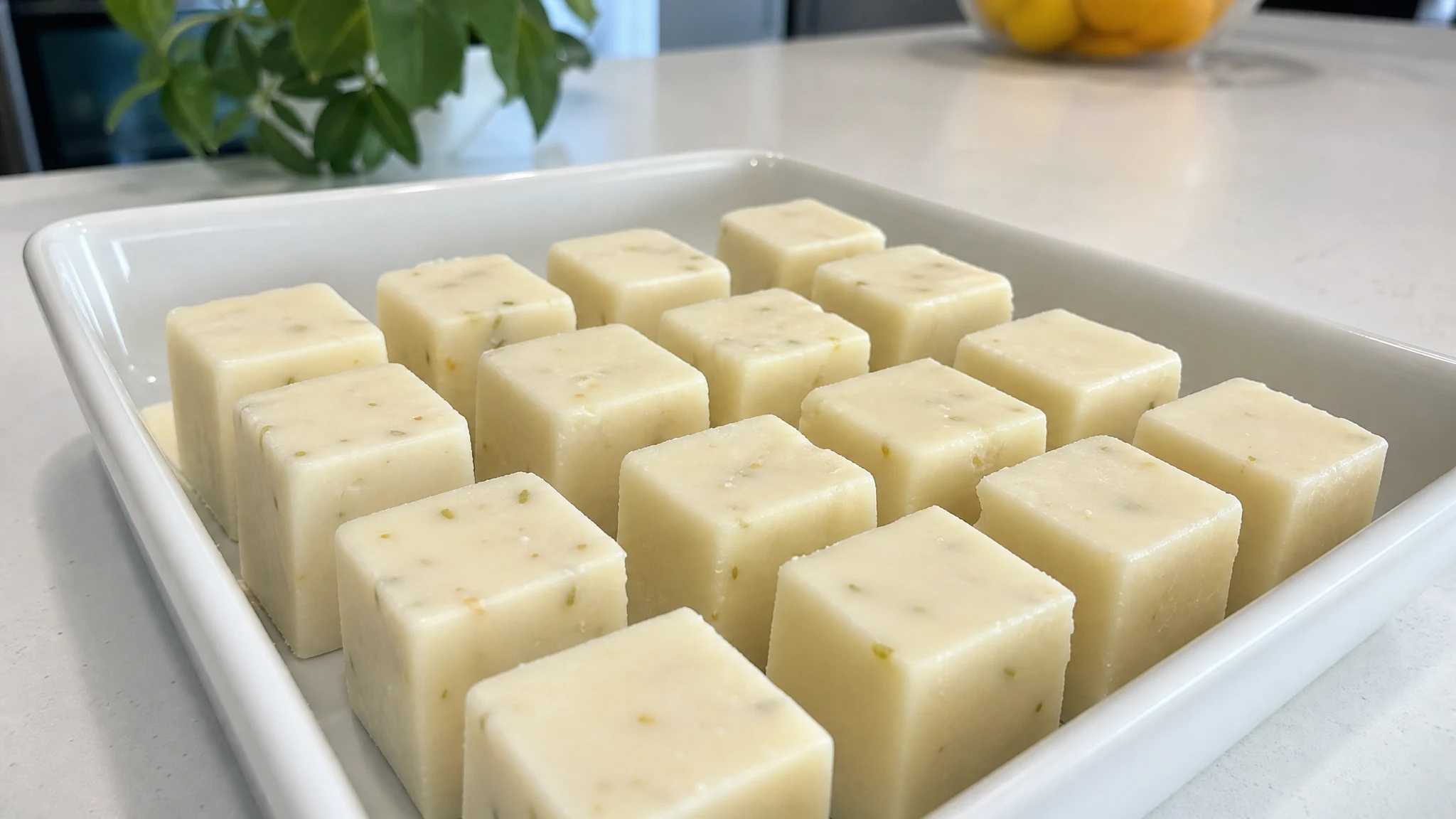
Chocolate Coconut Fat Bombs: Calories and Recipe by Weight
A fat bomb is a small chocolate square that sets firm in the fridge and melts the moment it reaches your tongue, which is a big part of its charm. It is also very nearly pure fat, so the number worth knowing before you make a batch is not the flavor but the arithmetic. The formula below lands at about 108 kcal and 7 g of saturated fat per piece. Here is how it is built, why it sets, and who it suits.
Fractionated Coconut Oil
Our own Fractionated Coconut Oil, in sizes from 0.5 oz to bulk.
From $9.99
Shop Now →What a fat bomb is for
Fat bombs exist to solve one puzzle on a ketogenic diet: getting a high share of calories from fat without adding carbohydrate. Harvard's review of the ketogenic diet describes that way of eating as typically under 50 g of carbohydrate a day, sometimes as low as 20 g, with 70 to 80% of calories from fat (Harvard T.H. Chan School of Public Health). If that is not how you eat, a fat bomb is simply a small, dense, sugar-free sweet, and nothing about it needs coconut oil in particular.
It is not a ketone shortcut either. In a nine-person crossover, pure C8 triglyceride raised blood ketones far more than coconut oil, whose effect over the day was not significantly different from the control day (Vandenberghe et al., 2017). Ketosis follows the carbohydrate limit, and the fat bomb just helps you fill the calories around it. Our MCT oil versus coconut oil comparison explains why coconut oil behaves differently from MCT products.
The formula, by weight
Weigh everything rather than using cups; a cup of nut butter varies far more than 60 g does. This formula comes from published nutrient tables and simple arithmetic.
- 100 g food-grade coconut oil, melted
- 60 g plain almond butter, no added sugar
- 15 g unsweetened cocoa powder
- A pinch of salt, plus a zero-calorie sweetener to taste if you like
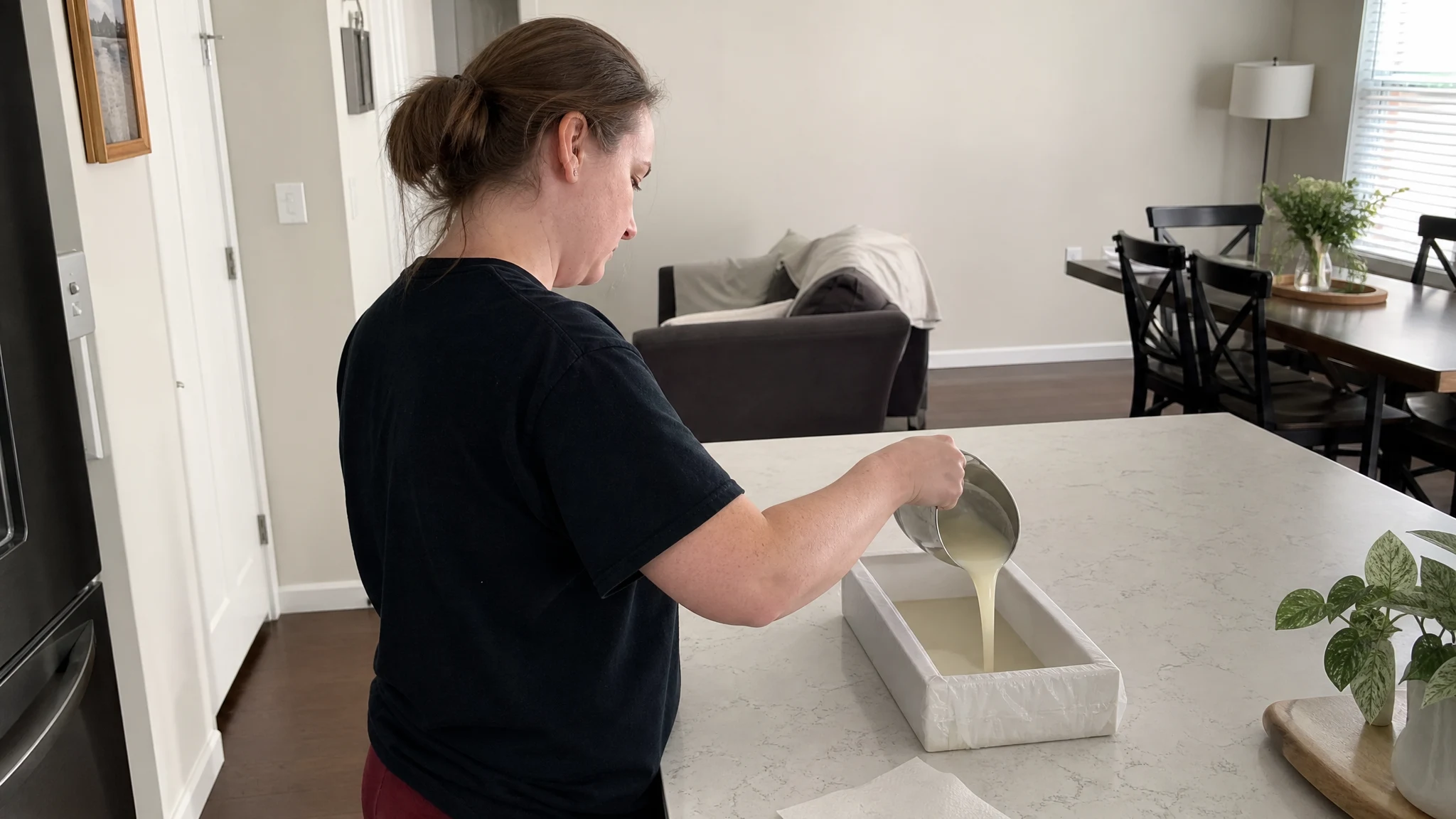
Whisk everything together while the oil is just liquid, pour into 12 small molds and chill until firm. Using USDA FoodData Central entries for the three ingredients, the whole batch comes to about 1,295 kcal, 134 g fat, 86 g saturated fat and 20 g carbohydrate, 11.7 g of it fiber. Divided by 12, each piece is about 108 kcal with 7.2 g saturated fat and 1.7 g carbohydrate (0.7 g net of fiber).
Swap in peanut butter and the numbers barely move. Swap the nut butter for 40 g of unsweetened dried coconut and the carbohydrate dips a little, while saturated fat climbs to about 8.9 g a piece. That is the trade worth noticing: lowest carb and gentlest on the heart do not always point the same way. Almond butter is a nice middle path, since most of its fat is not saturated, at about 4 g per 100 g against 82.5 g for coconut oil. For something chewy and portable, coconut oil energy balls take a different route, and chocolate bark is the sibling for a snap rather than a melt.
Why a fat bomb sets, sweats or slumps
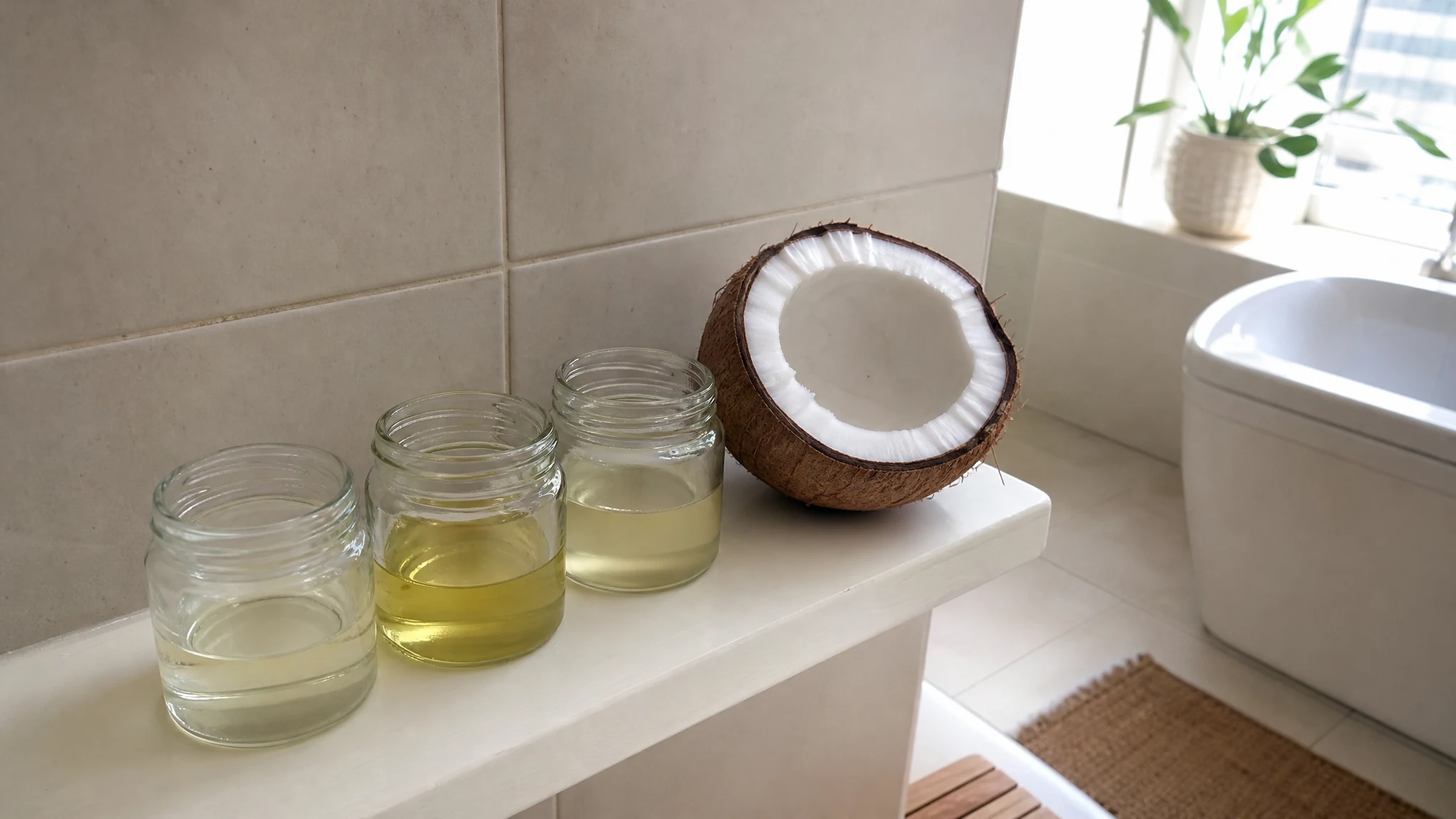
The useful fact comes from our virgin unrefined listing: coconut oil is solid below about 76 degrees Fahrenheit and melts in warm hands. A fat bomb is mostly that solid fat holding cocoa and nut butter in place, and three practical things follow from it.
It will not travel well in a warm bag, because above that temperature the structure softens, so keep the squares chilled and carry them in a cooler. More nut butter makes a softer piece, since nut butter brings its own oil, which is liquid at room temperature, so roughly 100 g of coconut oil to 60 g of everything else is a good starting balance. And stir until the mixture just begins to thicken before you pour, because cocoa and nut solids sink in liquid oil and you want them suspended when it sets.
It is also the plain reason our fractionated oil belongs in a different jar. We describe it as staying liquid at any temperature, so a fat bomb made from it would never firm up, and both of our oils are sold for external cosmetic use only. Our fractionated coconut oil explainer says what they are really for.
What the evidence says about eating this way
The best long-term comparison is a 2013 meta-analysis of 13 randomized trials lasting at least 12 months, which compared very-low-carbohydrate ketogenic diets with low-fat diets. Body weight fell about 0.9 kg more on the ketogenic diets, triglycerides fell and HDL rose, while LDL cholesterol also rose a little (Bueno et al., 2013). Harvard's review adds that the weight difference did not persist at two years and that most studies were small and short.
The LDL result matters most with coconut oil, which is 82.5 g saturated fat per 100 g in the USDA table. The American Heart Association's 2017 advisory summary notes that 82% of coconut oil's fatty acids are saturated and advises against using it because it raises LDL cholesterol (American Heart Association, 2017), and a pooled analysis of 16 trials found LDL about 10.5 mg/dL higher with coconut oil than with non-tropical vegetable oils (Neelakantan et al., 2020). Our view, offered as a view: a fat bomb is a treat for people already following a ketogenic plan, ideally with a clinician involved, and coconut oil need not be the fat in every piece. Our saturated fat post goes deeper.
The arithmetic makes it concrete. Harvard's summary of the 2025-2030 Dietary Guidelines puts the 10% saturated fat ceiling at roughly 22 g on a 2,000 calorie diet (Harvard, 2026). Two pieces of the formula above come to 14.4 g, about two thirds of that, before any other food.
Who should check first
Harvard's review says the safety of a ketogenic diet is unclear for people with kidney or liver disease, for people who are pregnant or breastfeeding, and for children and adolescents, and recommends seeing a physician and a dietitian first. The same goes for anyone with diabetes (the review notes ketoacidosis occurs mostly in type 1 diabetes) or high LDL. Those decisions rest on your own lab results, so they belong with your own clinician.
A note on jars: our fractionated coconut oil is made for skin and hair, and it stays out of the mixing bowl.
For everyone else the practical idea is to look at saturated fat across the whole day rather than the single piece, and enjoy a square as the treat it is.
Fractionated Coconut Oil
Fractionated Coconut Oil from our own shop, in sizes from 0.5 oz to bulk.
From $9.99
Shop Now →Sources & Further Reading
- Harvard T.H. Chan School of Public Health, 2026. Diet review: ketogenic diet. nutritionsource.hsph.harvard.edu
- Vandenberghe C et al., 2017. Tricaprylin alone increases plasma ketone response more than coconut oil or other medium-chain triglycerides. Curr Dev Nutr 1(4):e000257. PMC5998344
- USDA, 2019. FoodData Central: Oil, coconut (171412); Nuts, almond butter, plain, without salt added (168588); Cocoa, dry powder, unsweetened (169593); Peanut butter, smooth, without salt (172470); Coconut meat, dried, not sweetened (170170). fdc.nal.usda.gov/171412
- Bueno NB et al., 2013. Very-low-carbohydrate ketogenic diet v. low-fat diet for long-term weight loss: a meta-analysis of randomised controlled trials. Br J Nutr 110(7):1178-1187. pubmed.ncbi.nlm.nih.gov/23651522
- American Heart Association, 2017. Dietary fats and cardiovascular disease: top things to know (Sacks et al., Circulation 2017;136:e1-e23). heart.org
- Neelakantan N, Seah JYH, van Dam RM, 2020. The effect of coconut oil consumption on cardiovascular risk factors. Circulation 141(10):803-814. pubmed.ncbi.nlm.nih.gov/31928080
- Harvard T.H. Chan School of Public Health, 9 Jan 2026. Dietary Guidelines for Americans 2025-2030: progress on added sugar, protein hype, saturated fat contradictions. nutritionsource.hsph.harvard.edu