How to Remove Coconut Oil Stains From Clothes and Bedding
Oil on skin and hair has a way of ending up on pillowcases, towels and favorite shirt collars. The reassuring news is that a coconut oil stain is an ordinary grease stain, and grease stains give way to a simple routine: treat early, wash hot, and keep the item out of the dryer until the mark has fully gone. We make oils, not laundry products, so the core method here comes from a cleaning-industry guide, and anything we add is flagged as our own reasoning.
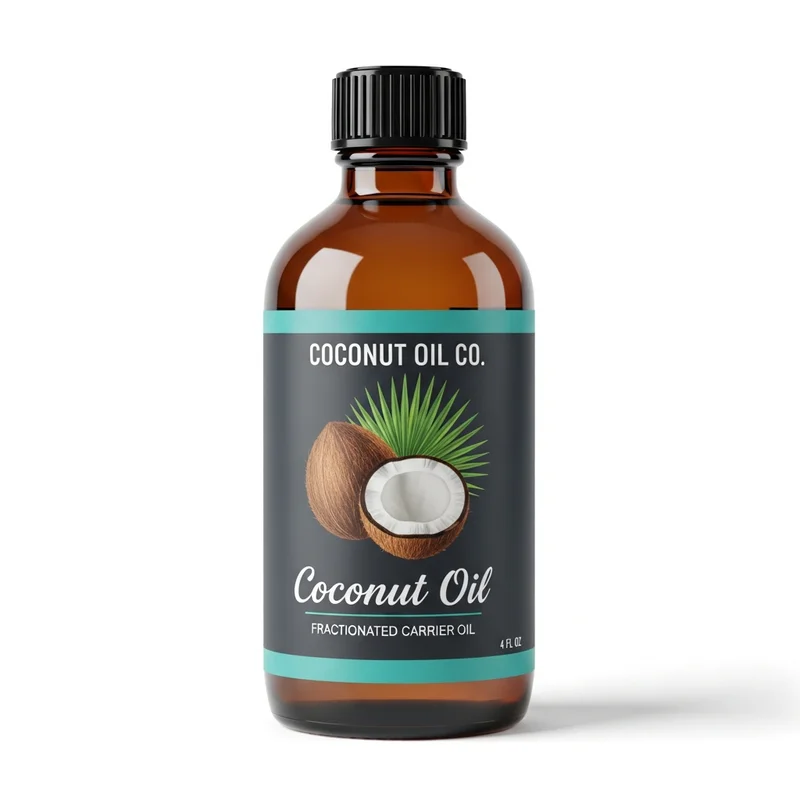
Fractionated Coconut Oil
Our own Fractionated Coconut Oil, in sizes from 0.5 oz to bulk.
From $9.99
Shop Now →The one rule worth memorizing
The American Cleaning Institute's Stain Removal Guide (updated March 2026) says: "Do not put it in the dryer until the stain is removed." Dryer heat is what turns a faint grease mark into a dark, lasting one. If a spot is still visible when the wash finishes, air dry the item and treat it again.
Light stain or heavy stain?
| Situation | Method (from the ACI guide) |
|---|---|
| Light stain, a smear or a few drops | Pretreat with a prewash stain remover, liquid laundry detergent or liquid detergent booster, then launder in the hottest water safe for the fabric. |
| Heavy stain, a soaked patch | Place the stain face down on clean paper towels, apply cleaning fluid to the back of the stain, replace the towels often, let dry, rinse, then launder in the hottest water safe for the fabric. |
The guide's grease entry does not name coconut oil, so applying it here is an inference: coconut oil is an oil, and the oil method fits. "Hottest water safe for the fabric" means whatever the care label allows, so read the label first.
Two oils, two starting points
These steps are not in the ACI guide. They follow from how our two oils behave.
- Virgin unrefined. It is firm in a cool room, so a spill can sit as a waxy dab. Scrape the solid off with a spoon or dull knife before you apply anything, so you do not grind it in.
- Fractionated. It stays liquid at any temperature, so blot it, do not rub, and then pretreat.
- Speed. A fresh stain has not yet been heated, pressed and washed. An older stain that has been through the laundry can show up as a yellow-brown patch, and a second pretreatment plus a hot wash is the natural next move.
- Dark fabrics and delicates. Try any pretreatment on a hidden seam first, since stain removers and cleaning fluids can lift dye.
Sheets, pillowcases and towels
If you oil your hair or skin at night, a little will reach the bedding. The easiest habit follows from the same method: put a dab of prewash stain remover on the pillow area before the weekly wash, and use the hottest water the label allows. Using a touch less oil helps more than any laundry trick, because a few drops pressed into damp skin or hair wash out far more readily than a palmful. Our hair oiling guide covers amounts.
Picture a pillowcase with a faint grey patch where hair oil rubbed off. Check the care label for the temperature limit, lay the patch on a clean towel and work a little liquid detergent into it with your fingertips, moving from the edge of the stain inward so it does not spread. Wash at the hottest setting allowed. Before the dryer, hold the damp fabric up to a window, because wet cloth can hide a stain and heat would then set it. If a darker patch remains, repeat the steps. The window check is an extra precaution of ours, not part of the guide.
Oily towels by the stack
Anyone who buys carrier oil in larger sizes for studio or massage use will meet this at scale. The simplest approach is the guide's hot wash on every load. A laundry-equipment or detergent maker is the right place to ask about oil-heavy loads, and our wholesale page is the place to ask us about oil sizes.
Sofas, mattresses and rugs
Everything above is for washable fabric. A sofa, mattress or rug cannot take a hot wash, and cleaning fluid can leave a ring or damage the backing. Upholstery is outside what the ACI guide covers, so the sound advice is to follow the manufacturer's care instructions, blot rather than rub, test any product in a hidden spot, and call a professional upholstery cleaner for anything valuable. The National Park Service's conservation guidance makes the broader point that even natural cleaning products can stain or damage objects (Conserve O Gram 2/21), a good reason to leave improvising off an expensive surface.
If a stain comes back
Sometimes a stain looks gone when wet and reappears as the fabric dries, because oil deep in the fibers wicks back to the surface. The answer is the same as the first time: pretreat, wash hot, skip the dryer, and repeat once or twice before calling it permanent. For silk, wool or anything labeled dry clean only, take it to a professional and point out the stain.
It also helps to know what went onto the fabric. Our oils are sold neat, so a stain from our oil alone is a plain grease stain. Blends with essential oils or other ingredients are your own formulation, and the guide does not cover them.
A few things to skip
Water alone will not do it, because oil does not dissolve in water, which is why the guide begins with detergent or a stain remover. Hard scrubbing spreads the oil and can fray the weave. And dry-clean-only pieces belong with a dry cleaner, not a home mix.
For skin and hair, we describe our fractionated coconut oil as fast-absorbing and non-greasy, a feather-light option. We make no claim about fabric either way.
For more jobs around the house, see our household uses overview and the piece on polishing furniture.
Fractionated Coconut Oil
Fractionated Coconut Oil from our own shop, in sizes from 0.5 oz to bulk.
From $9.99
Shop Now →Sources & Further Reading
- American Cleaning Institute, updated March 2026. Stain Removal Guide (grease and oil). cleaninginstitute.org stain-removal-guide
- U.S. National Park Service. Conserve O Gram 2/21: Safer Cleaning Alternatives for the Museum & Visitor Center. nps.gov conserve-o-gram 2-21