Types of Coconut Oil: Which One Fits Your Job?
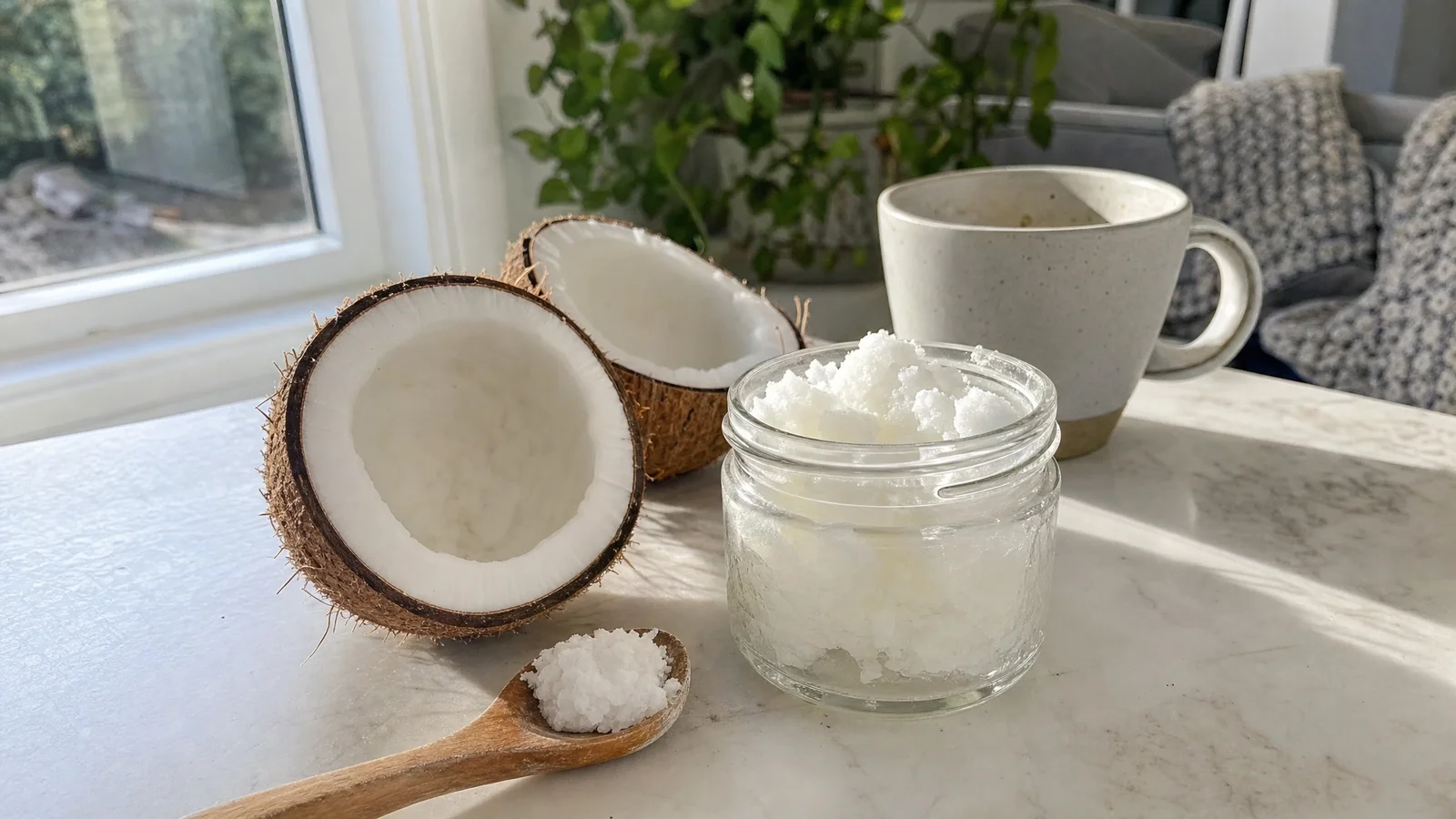
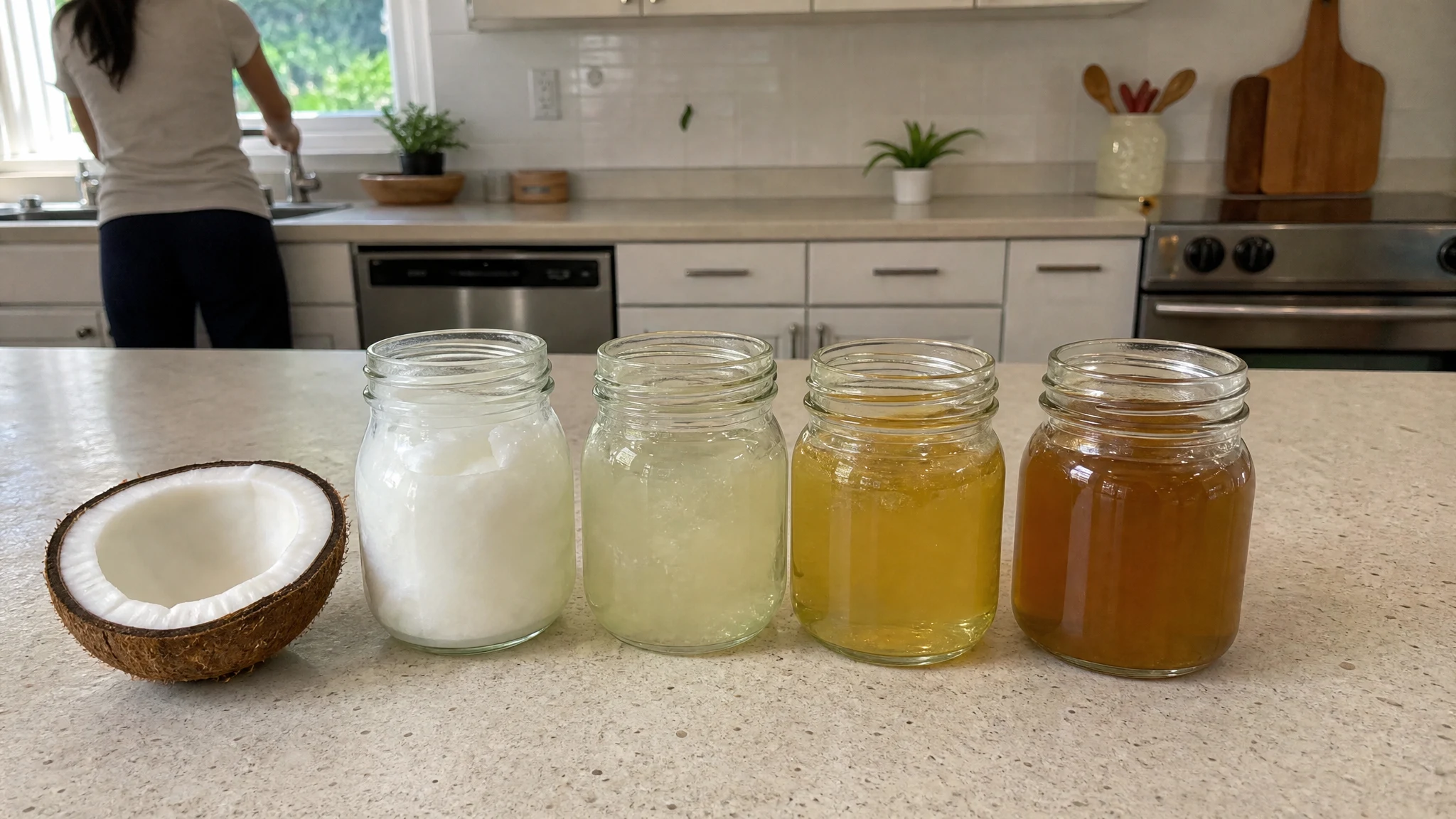
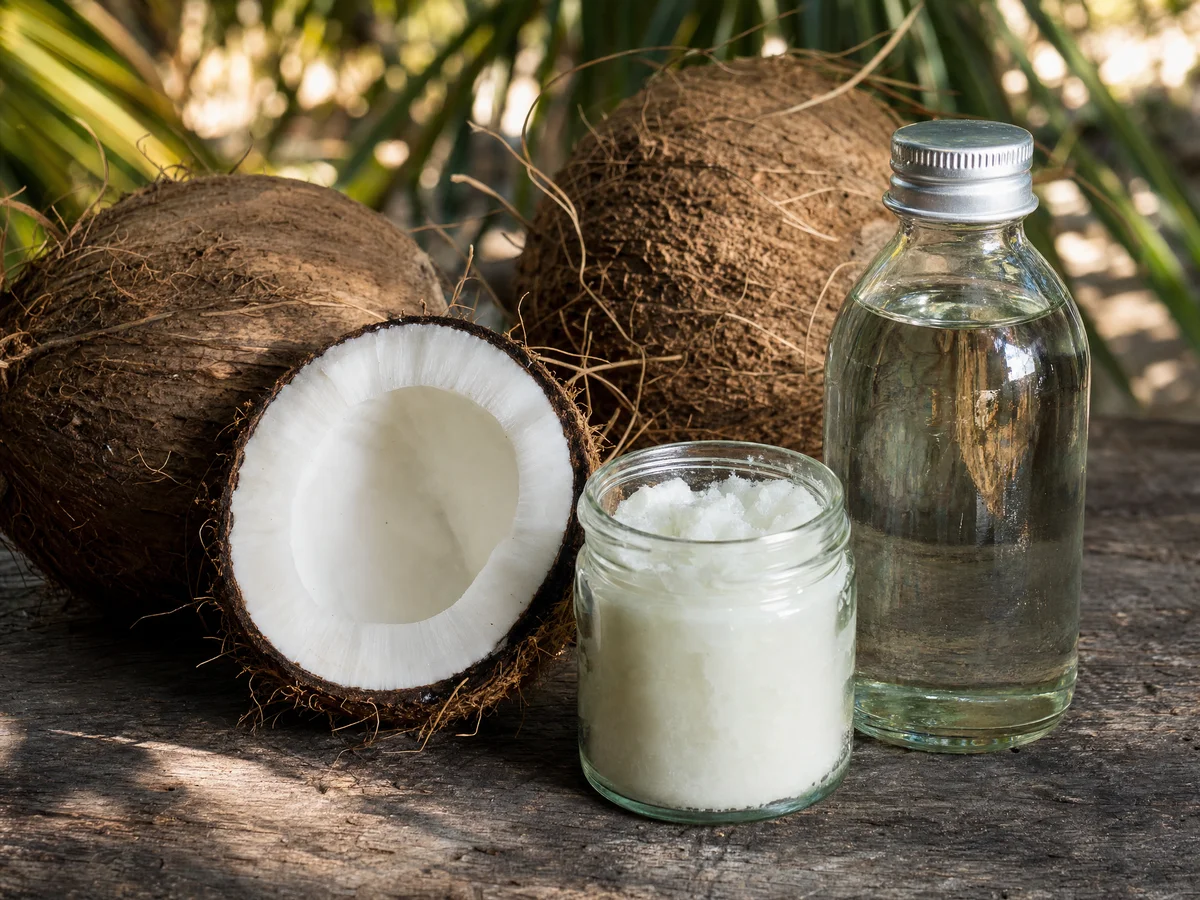
A tub of solid white coconut oil and a clear bottle of liquid coconut oil look nothing alike, smell nothing alike and feel nothing alike, yet both go by the same name. The good news is that choosing between them is simple once you ask one question first: will it go in the pan or on the skin? After that, it comes down to texture, scent and what you love to make.

Fractionated Coconut Oil
Our own Fractionated Coconut Oil, in sizes from 0.5 oz to bulk.
From $9.99
Shop Now →Start with eat or apply
Most of what you read about coconut oil and health is about oil that is eaten. The two oils we sell are labeled for external cosmetic use only, so if you are cooking, buy an oil sold as food. The FDA draws the line by intended use, noting that whether a product is a cosmetic or a drug is determined by its intended use, and ours are sold as cosmetics.
If you are curious how coconut oil fares as food, it is worth a look before you buy. A 2020 meta-analysis of 16 trials found LDL cholesterol 10.47 mg/dL higher on coconut oil than on non-tropical vegetable oils, and USDA data list it at 892 kcal and 82.475 g of saturated fat per 100 g. We see it as a pleasant occasional cooking fat for people whose doctor is happy with it, and not as a health product. Your own diet is a conversation for your doctor or a registered dietitian, and the detail lives in our heart health article.
Why one is liquid and one is solid
The difference comes down to chemistry. Whole coconut oil is roughly 49% lauric acid, 18% myristic, 8% palmitic, 8% caprylic and 7% capric, as Lin and colleagues tabulated it in 2018, and all that lauric and myristic acid is why it firms up in a cool room. Fractionation changes the picture. Healthline describes it as warming the oil, cooling it and separating out the solid part, which leaves mainly caprylic and capric acids and removes most of the lauric acid. That is the general method for the category, and we do not publish fatty acid figures for our own oil.
Here is how we would sort the choice.
| If you want | Look at | Why |
|---|---|---|
| A pourable oil that stays liquid at any temperature | Fractionated | We describe it as staying liquid, colorless, virtually odorless, fast-absorbing and non-greasy. |
| The smell of coconut | Virgin unrefined | We describe a rich, creamy, unmistakably coconut aroma, and we say to choose virgin if the scent is what you are after. |
| A neutral base for essential oil blends | Fractionated, for most blends | A virtually odorless oil leaves the blend's own scent in charge. Virgin pairs well with sweet orange, vanilla and sandalwood for anyone who wants coconut in the mix. |
| Soap, balm or candle making | Virgin unrefined | We list these among its uses, and it firms up below about seventy-six degrees Fahrenheit. |
Neither oil is the better one. They are different tools, and we say so on our own pages: fractionated is not the same as virgin, and we do not present it as such. For the process side, virgin versus refined and what fractionated oil is go step by step.
Where each one goes on the body
Hair and beard
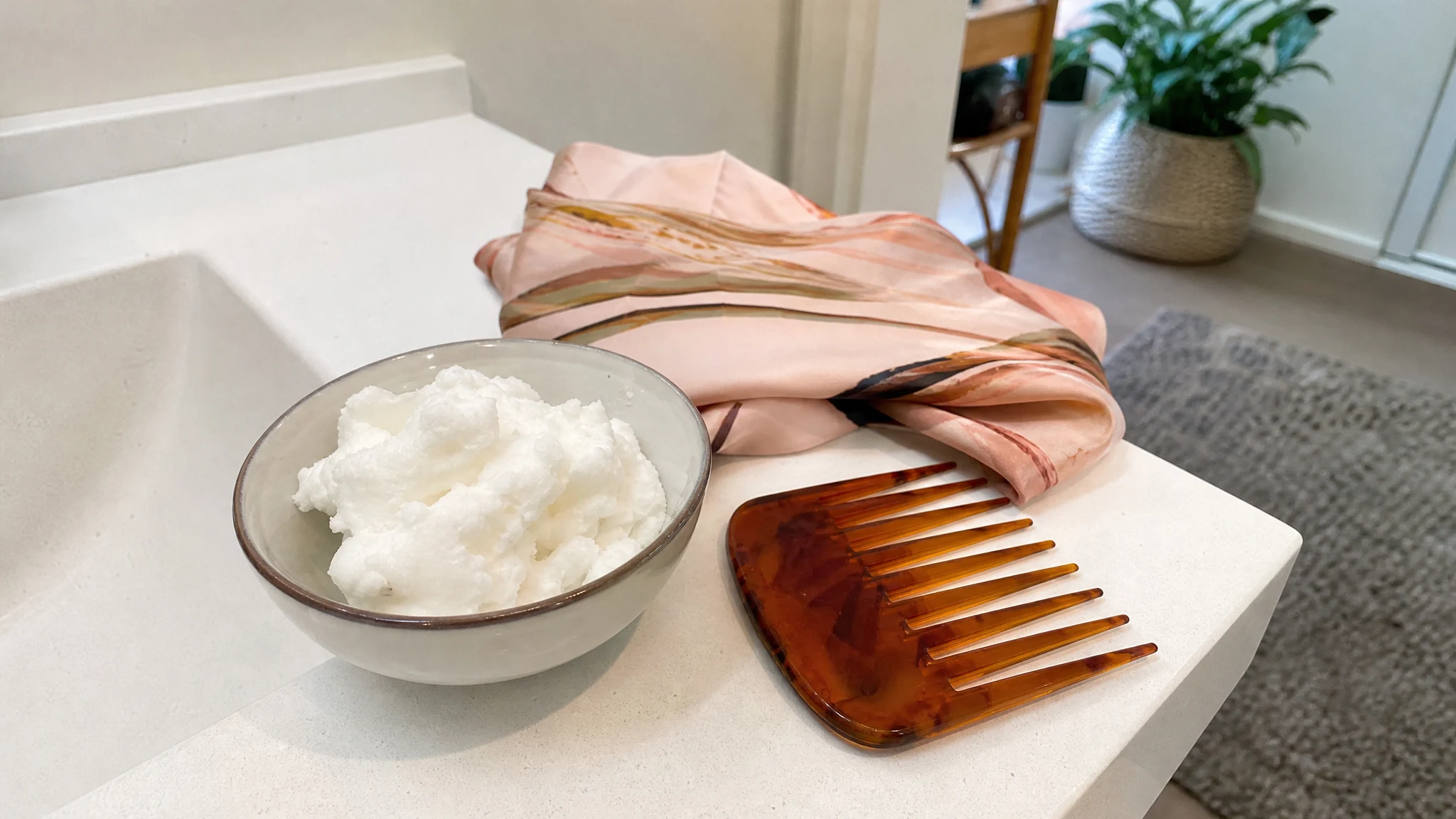
The research here is real but narrow. In Rele and Mohile's 2003 study of coconut, sunflower and mineral oil, coconut oil was the only one that markedly reduced protein loss from hair, applied before or after washing, and the authors credited its lauric acid triglyceride. Because fractionated oil has mostly lost its lauric acid, applying that finding to it is an inference, and we know of no study of it on hair. Reasoning from composition, virgin oil is closer to what was tested. For a light everyday hair or beard oil, we sell the fractionated oil as exactly that. More in our hair article.
Skin and massage
Fractionated oil is sold neat for massage blending, and we describe it as fast-absorbing and non-greasy. Do a small patch test first and wait 24 hours, as we advise, and keep it out of your eyes. Whether coconut oil clogs pores is debated, since comedogenic ratings come from methods that do not agree, so we make no claim either way, and the ratings are unpacked here.
Jobs for other products
Sun protection is the clearest example. The FDA advises broad spectrum sunscreen of SPF 15 or higher, reapplied at least every two hours, and our oil has no SPF rating, as this article explains. The mouth, skin conditions, babies and pets also call for other products and other professionals: a dentist, dermatologist, pediatrician or veterinarian can make those calls, and we make no medical claims.
A word on allergy
In January 2025 the FDA revised its food allergen guidance, and its FAQ now says it no longer considers coconut a major food allergen. That is a food-labeling rule, not a promise that coconut suits everybody. We ask anyone with a tree nut or coconut allergy to check with a professional before use, and we stand by that.
What our paperwork shows
We publish a certificate of analysis for one batch of the fractionated oil. It gives a relative density at 20 C of 0.948, a refractive index of 1.450 and an optical rotation of +0.00 degrees, each against a stated standard. It does not include a fatty acid profile, peroxide value, heavy metal or microbial data, and it does not name a laboratory. If you need any of those, especially for a bulk order, ask us in writing before you buy.
The short version: for a liquid cosmetic oil for massage, blending or hair, pick fractionated. For the coconut scent, or for soap and balm making, pick virgin unrefined. Our origin page sets out what we say about both.
Once you know what the job is, the choice stops being a puzzle. Start with the task, and the right jar or bottle tends to pick itself.
Fractionated Coconut Oil
Fractionated Coconut Oil from our own shop, in sizes from 0.5 oz to bulk.
From $9.99
Shop Now →Sources & Further Reading
- US FDA. Is it a cosmetic, a drug, or both? fda.gov/cosmetics
- Neelakantan N, Seah JYH, van Dam RM, 2020. The effect of coconut oil consumption on cardiovascular risk factors. Circulation 141(10):803-814. pubmed.ncbi.nlm.nih.gov/31928080
- USDA FoodData Central, SR Legacy. Oil, coconut, FDC ID 171412. fdc.nal.usda.gov/171412
- Lin TK, Zhong L, Santiago JL, 2018. Anti-inflammatory and skin barrier repair effects of topical application of some plant oils. Int J Mol Sci 19(1):70. pmc.ncbi.nlm.nih.gov/PMC5796020
- Healthline, undated. Fractionated coconut oil (secondary source). healthline.com/nutrition/fractionated-coconut-oil
- Rele AS, Mohile RB, 2003. Effect of mineral oil, sunflower oil, and coconut oil on prevention of hair damage. J Cosmet Sci 54(2):175-192. pubmed.ncbi.nlm.nih.gov/12715094
- US FDA. Sunscreen: How to help protect your skin from the sun. fda.gov/sunscreen
- US FDA. Questions and answers on food allergen labeling (fifth edition). fda.gov allergen FAQ