Coconut Oil on Wooden Cutting Boards: Should You?
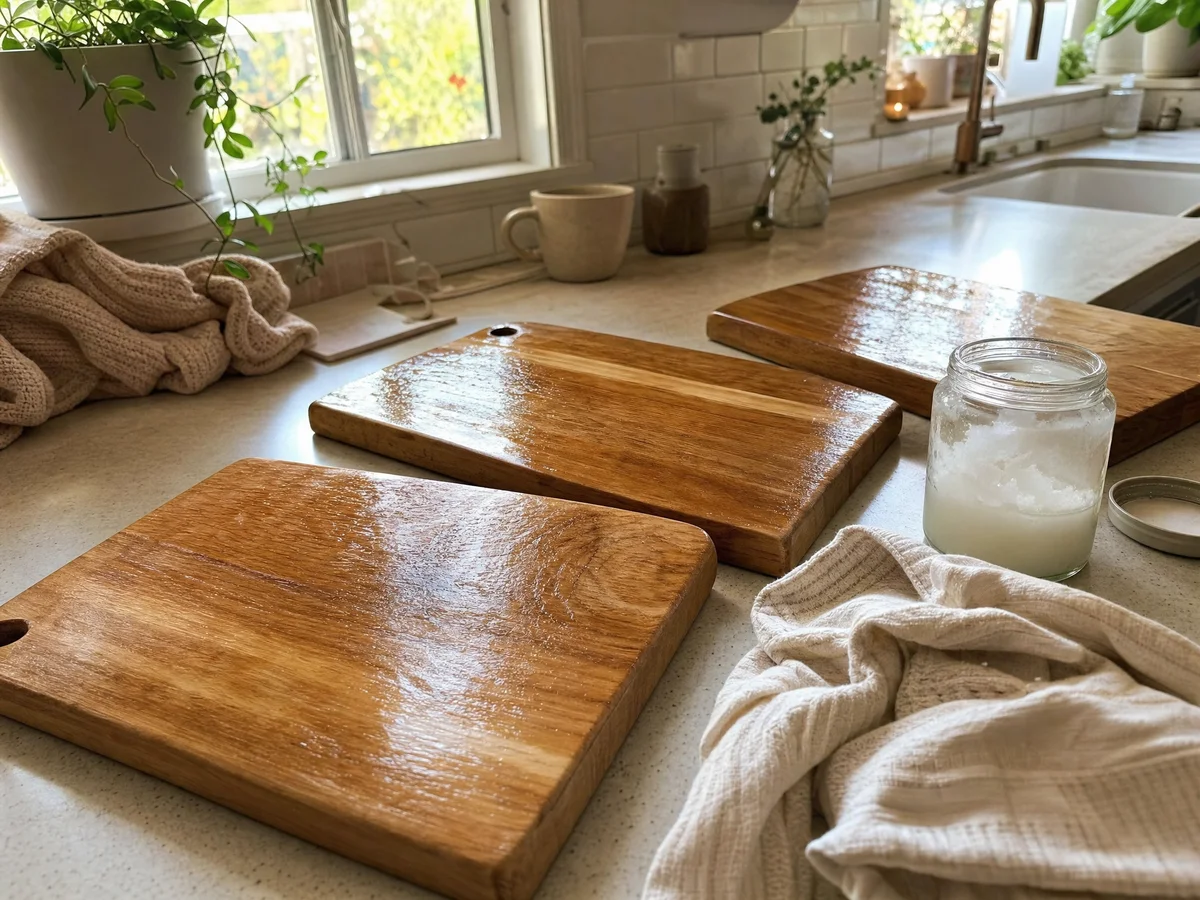
A freshly oiled wooden board has a glow all its own: deep, even and a little silky under the hand, and it makes you want to chop something. It is no wonder cooks love the ritual. Here is a gentle surprise from the research, though. The sanitary magic people credit to oiling mostly belongs to the wood itself, and that makes oiling a pleasure of ownership rather than a safety step. One note up front: the coconut oils we sell are cosmetic oils for external use only, not food products, so we will be clear about where ours belongs and where it does not.

Fractionated Coconut Oil
Our own Fractionated Coconut Oil, in sizes from 0.5 oz to bulk.
From $9.99
Shop Now →What lab work shows about wood
The study everyone should know is a pair of papers from 1994 by Ak, Cliver and Kaspar. They cut small blocks from nine hardwoods and from plastics (four polymers plus hard rubber), new and used, then applied E. coli, Listeria or Salmonella in broth or chicken juice. Bacteria were readily recovered from plastic for minutes to hours and could multiply overnight. Clean wood generally soaked up the inoculum within 3 to 10 minutes, and when the liquid held the kind of bacterial load raw meat or poultry might leave, the bacteria generally could not be recovered afterward. With much heavier loads, numbers on wood still fell by at least 98% after 12 hours. The authors concluded that the results do not support the idea that plastic boards are more sanitary than wood (Ak, Cliver and Kaspar, J Food Prot, 1994).
Notice what role oil played: a minor one. The same abstract says that mineral oil treatment of the wood had little effect on the findings, so the star was the wood. The companion paper found that hot water and detergent generally removed the bacteria whatever the wood species and whether the board was new or used, while a coat of chicken fat let some bacteria hang on for up to 12 hours in warm, humid conditions (Ak, Cliver and Kaspar, decontamination study). It also noted that deeply knife-scarred plastic was hard to clean by hand.
These were small-block laboratory experiments using mineral oil rather than coconut oil, so they are not a test of your kitchen board. Reasoning from them, the habits that carry the weight are the familiar ones: wash promptly with hot water and detergent, do not leave fat sitting on the surface, and keep raw meat and ready-to-eat food on separate boards. Oil is a lovely extra on top.
So why oil a board at all?
Because it makes a good board even nicer. People oil boards for the look, the feel and the quiet satisfaction of looking after a good piece of wood. We could not find a standards body or food-safety agency that quantifies how oiling affects cracking, warping or staining, so we call it a care preference and leave it there, and a perfectly good one.
Why cooks keep reaching for coconut oil
There is a sensible reason coconut oil comes up. It is highly saturated, about 90% saturated fat, with only 5 to 10% oleic acid and very little vitamin E (Abrante-Pascual and colleagues, Foods, 2024). Fewer unsaturated bonds mean fewer places for oxidation to begin, which is the chemistry behind rancid-smelling oils, and a 2025 review by Gharby and colleagues describes a six-week sunlight study in which coconut oil held up best of the oils compared. That is a finding about oils in general, not about boards, so the idea that coconut oil should stay fresh longer on wood is our reasoning from its composition. It is a good reason to like it, and it echoes the logic in our guide to storing coconut oil.
If you go the coconut route, three choices are worth making up front.
- Choose an oil sold for food. A board touches what you eat, so a little oil ends up in your dinner. Our fractionated and virgin unrefined oils are sold as cosmetic carrier oils for external use. The certificate of analysis we publish for one fractionated batch shows density, refractive index and optical rotation, and nothing on microbes, peroxide value or contaminants, so we would not point you to either of ours for a chopping board. A coconut oil from the food aisle, or a board conditioner sold for food contact, is the right shop for this job.
- Think about who eats from the board. The FDA's allergen labeling FAQ says it no longer considers coconut a major food allergen (guidance edition published 6 January 2025), though that is a labeling category for packaged food and not a statement that nobody reacts to coconut (FDA). If a guest or family member has a coconut allergy, talk to their allergist first, and mention it to anyone you gift a coconut-oiled board to. Our allergy article explains the labeling point.
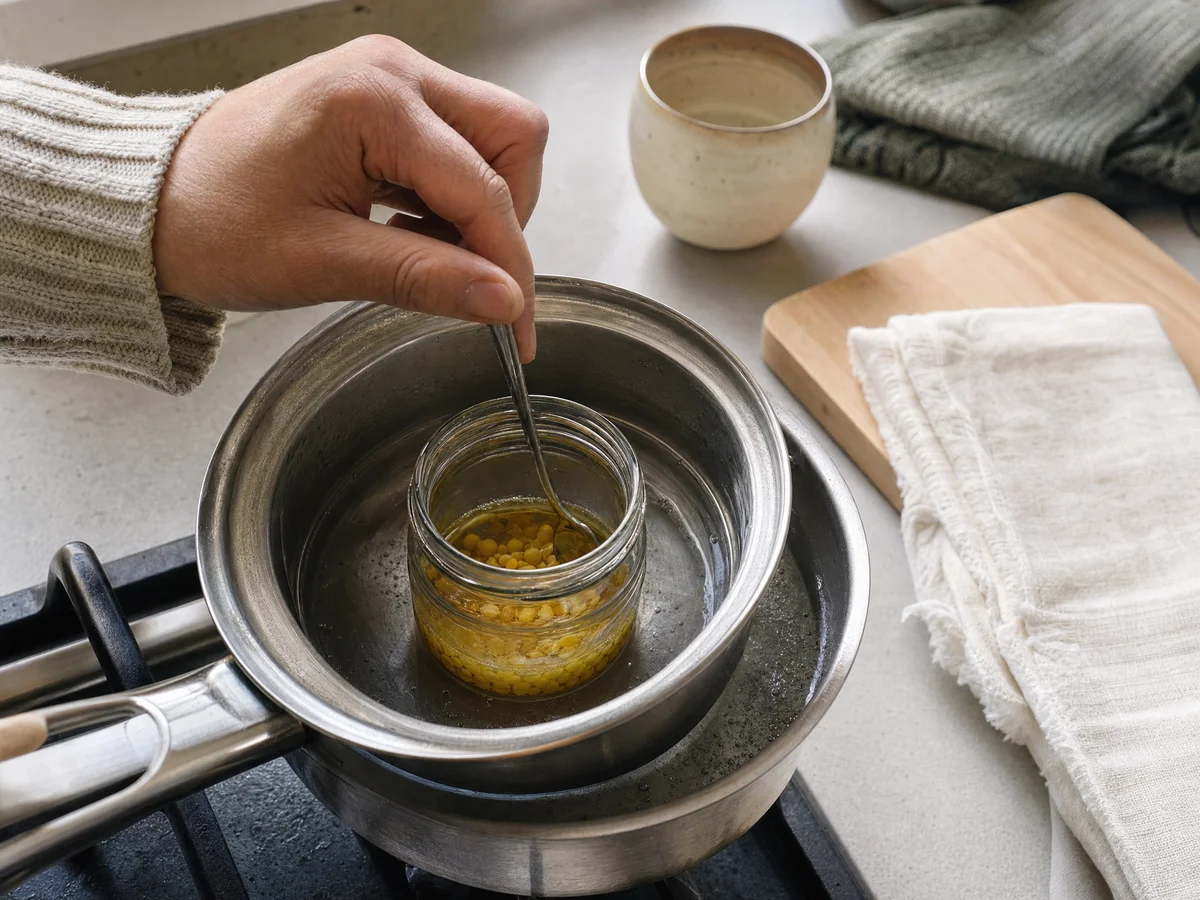
- Match the texture to the job. A liquid oil soaks in easily, while a firm one needs warming first. Whichever you use, a thin coat that you let soak in and then buff is plenty.
Let your nose be the guide
A board that smells off is telling you something. Rancid oil is easy to smell, and the answer is to resurface or retire the board rather than add more oil. Deep grooves that hold food, or a board that met raw poultry without a proper wash, are questions for a food-safety source such as your local extension office or health department. The lab blocks were clean and freshly inoculated, and a real board carries years of knife marks, which the studies do not address.
Where our oils shine
Skin and cosmetic crafts are our home turf. If you want a liquid carrier oil for blends and body care, our fractionated coconut oil stays liquid at any temperature, and we describe it as fast-absorbing and non-greasy. For wood elsewhere in the house, our furniture polish article covers a surface that never touches food, and the cast iron seasoning article tackles another kitchen question. If oil lands on a tea towel, the stain removal article has the steps.
So wash your wooden board well, enjoy oiling it if you like how it looks, and choose an oil that was made to be near food.
Fractionated Coconut Oil
Fractionated Coconut Oil from our own shop, in sizes from 0.5 oz to bulk.
From $9.99
Shop Now →Sources & Further Reading
- Ak NO, Cliver DO, Kaspar CW, 1994. Cutting boards of plastic and wood contaminated experimentally with bacteria. J Food Prot. PMID 31113021
- Ak NO, Cliver DO, Kaspar CW, 1994. Decontamination of plastic and wooden cutting boards for kitchen use. J Food Prot. PMID 31113026
- Abrante-Pascual S et al., 2024. Vegetable oils and their use for frying: a review of their compositional differences and degradation. Foods 13(24):4186. PMC11675685
- Gharby S et al., 2025. Vegetable oil oxidation: mechanisms, impacts on quality, and approaches to enhance shelf life. PMC12146556
- U.S. FDA, 2026. Frequently asked questions: food allergen labeling guidance. fda.gov