How to Melt Coconut Oil Fast: 4 Easy Ways
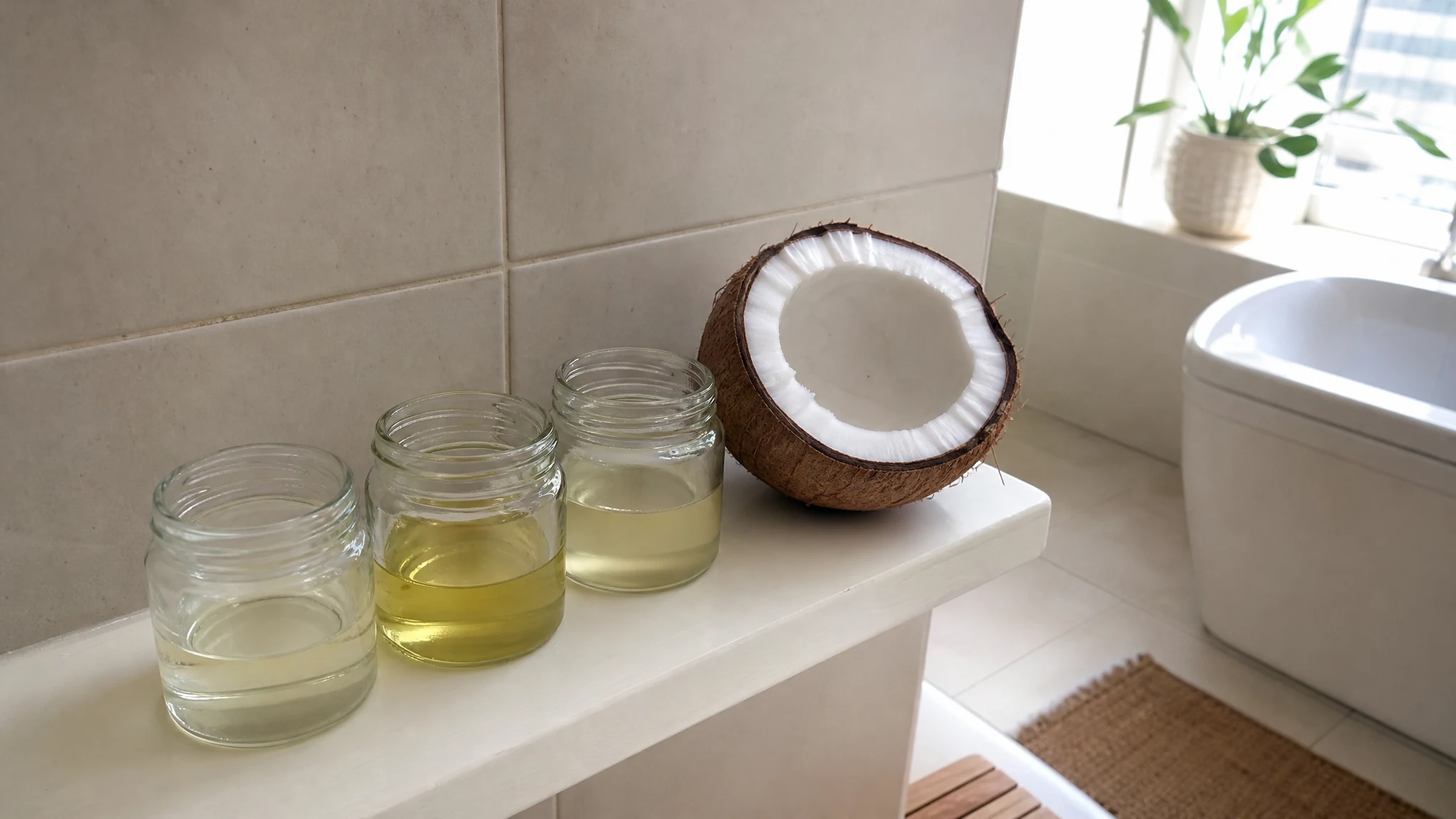
Coconut oil lives right on the edge of liquid. The same jar can be a firm white block in January and a clear golden pool in July, and a few degrees decide which. That makes the fastest way to melt it almost always the gentlest one, and the right method depends on how much oil you have and how soon you need it. Here is how we would pick, from a scoop in your palm to a full jar, plus the one oil of ours that never needs melting at all.

Fractionated Coconut Oil
Our own Fractionated Coconut Oil, in sizes from 0.5 oz to bulk.
From $9.99
Shop Now →How solid is solid?
A 2026 study put coconut oil in a differential scanning calorimeter and found untreated virgin oil melting at about 25.25 C (77.5 F) and refined, bleached and deodorized oil at 26.86 C (80.3 F). The authors describe a broad melting range with a shoulder, which means the fat softens in stages instead of snapping from solid to liquid at one temperature. They link that to its mix of triglycerides, over 90% saturated, with lauric acid the biggest share (Yang et al., Food Chem X, 2026). Our virgin unrefined oil sets below about 76 degrees Fahrenheit, which lands in the same neighborhood.
Reasoning from that, and not from any kitchen trial: a jar in a 70 F pantry will be soft to firm, and one on a warm counter may already be liquid. If you only need a scoop, you may not need to melt anything.
A teaspoon or two: your own hands
For a little oil to smooth over skin or through hair ends, scoop it out and rub it between your palms. Skin is warmer than the oil's melting range, so it turns silky within seconds. Nothing can overheat, and there is no dish to wash, which is why it is our first choice for small amounts.
A few tablespoons: a warm-water bath
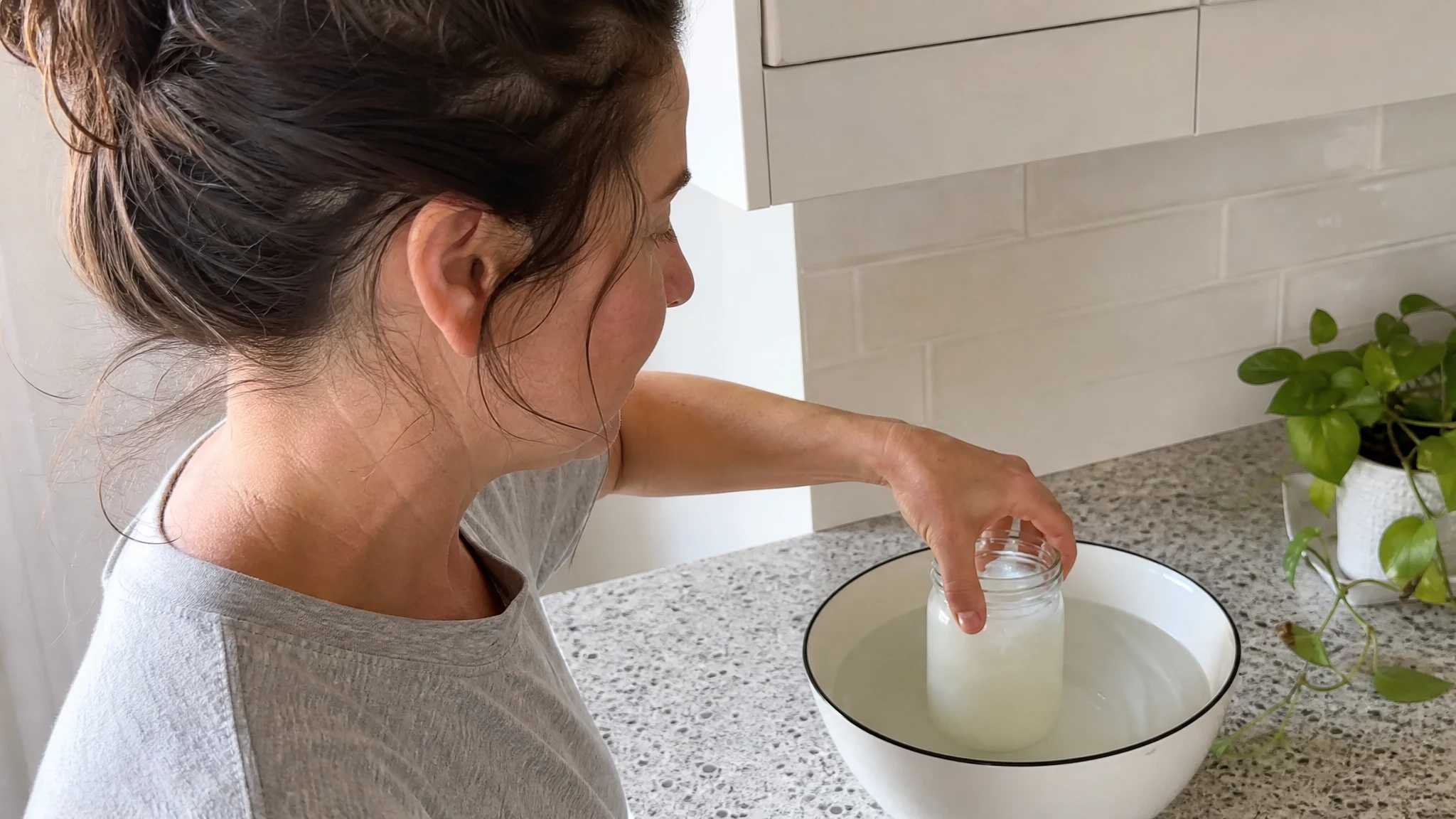
- Spoon the oil into a clean, dry, heat-safe glass jar or bowl.
- Set it in a bowl of hot tap water that comes partway up the jar, never over the rim.
- Stir with a dry spoon every minute or so, and refresh the water if it cools.
Keep the water out of the oil. A 2025 review of vegetable oil oxidation describes water as a catalyst for oxidation (Gharby et al., Food Chem X, 2025), and a stray drop in hot oil spatters. The bath works because water carries heat evenly around the glass, so it scales from a few tablespoons to a whole jar. For a bigger jar, use a pot over low heat with the jar on a folded towel or trivet, so the glass is not resting on the pot floor.
A cup or more: the stove on its lowest setting
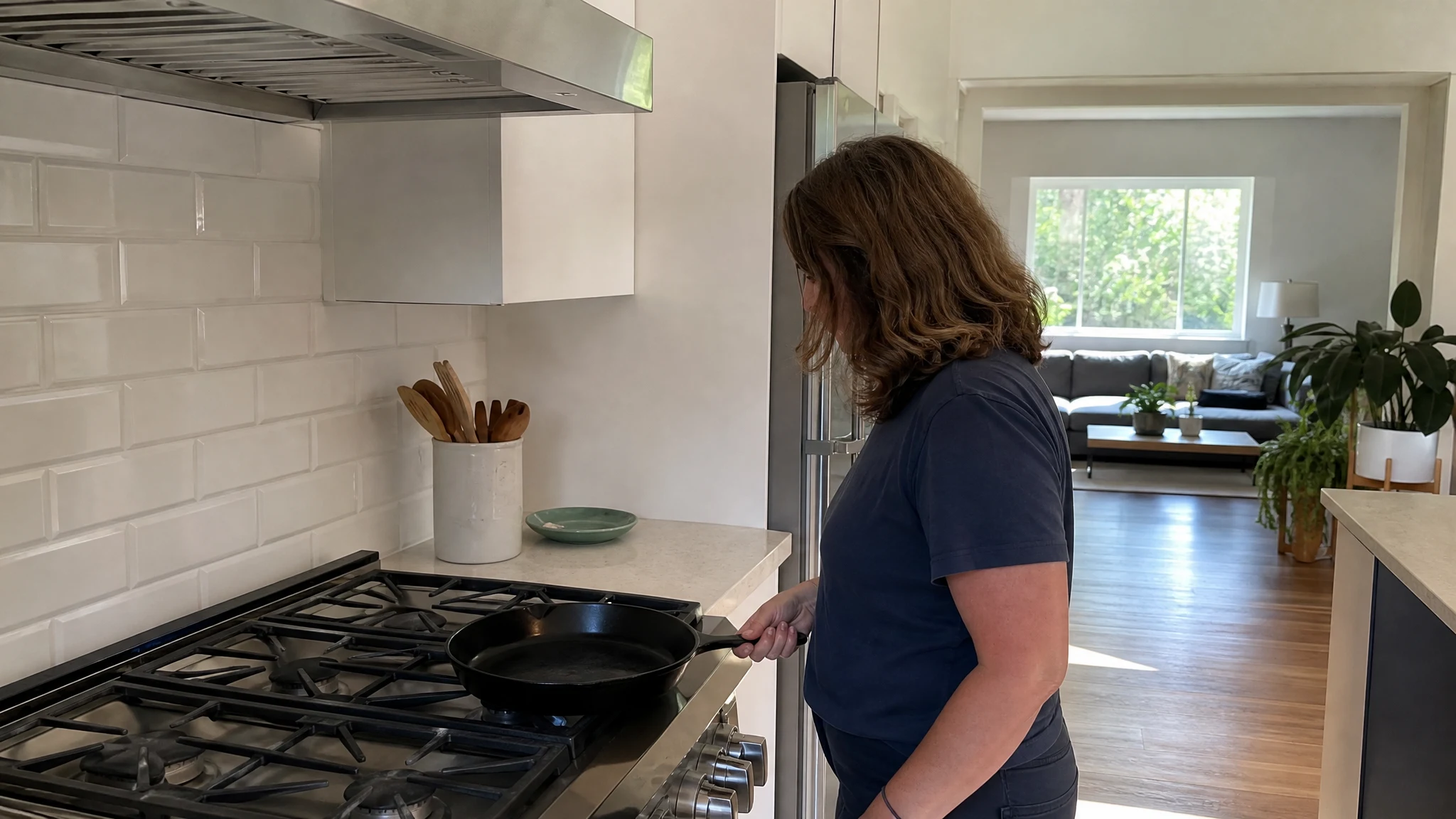
Put the oil in a small saucepan on the lowest heat and stir. Lift it off the burner when the last lumps disappear, because you want it just liquid, not hot. The same review notes that oxidation rates roughly double for every 10 C rise in temperature, which is a good reason to stop at just liquid. Heat is what ages an oil. Stay with the pan, and if oil ever overheats, smother it with a lid and never water.
The microwave, with good manners
The microwave is the quickest option and the least even, since it heats in pockets and a fully liquid cup can sit beside a lump (that is reasoning from how microwaves work, not a measured result). Use a microwave-safe glass or ceramic container with no metal, run 15 to 20 second bursts, and stir between each. Stop while a few solid bits remain, because they will melt into the warm liquid. Use a mitt, since the dish can be hotter than the oil looks, and pour the oil into a proper bowl instead of heating it in its original bottle.
What happens when it sets again
A melted jar that cools will not look exactly as it did. How coconut oil cools changes how its crystals form, so the re-set jar can feel smoother, harder or just a little different. It is the same oil, and a texture change is not spoilage. Our storage guide explains how to tell the two apart.
Two habits make life easier. Melt what you plan to use and leave the rest in the jar, since repeated warming and cooling puts the same oil through heat and air again and again. And break a firm jar into small spoonfuls before heating, because a thin layer melts faster than a deep block and saves more time than a hotter burner.
Melting for a project
If you are melting oil for a balm, scrub or lip product, take it off the heat first and add the other ingredients while it is warm, not hot. Coconut oil melts at a lower temperature than many balm ingredients, so it rarely needs long on the heat. Our lip balm and sugar scrub articles take it from there.
The oil with nothing to melt
Our fractionated coconut oil stays liquid at any temperature, and the reason is in how it is made: fractionation removes most or all of the lauric acid, the component that makes ordinary coconut oil set (Healthline, 2019). If a rock-solid winter jar is what bothers you, fractionated coconut oil is worth a look before you buy a faster heater. It is an external cosmetic oil, and it feels and smells different from virgin, so read virgin versus refined and fractionated versus virgin first. If you love the coconut scent and a firm set, our virgin unrefined coconut oil behaves exactly as described above.
The short version: use warmth, not heat, and melt only what you need. Hands for a spoonful, a water bath for a jar, and the stove or microwave with a stirring spoon close by.
Fractionated Coconut Oil
Fractionated Coconut Oil from our own shop, in sizes from 0.5 oz to bulk.
From $9.99
Shop Now →Sources & Further Reading
- Yang H et al., 2026. Synergistic effects of ultrasound and stirring on crystallization behavior of coconut oil. Food Chem X 37:104068. PMC13277645
- Gharby S et al., 2025. Vegetable oil oxidation: mechanisms, impacts on quality, and approaches to enhance shelf life. Food Chem X. PMC12146556
- Healthline, 2019. Fractionated coconut oil: what it is and how it differs. healthline.com