Coconut Oil Sugar Scrub: Getting the Texture Right
Every sugar scrub comes down to one small decision: how much oil goes into the sugar. Get it right and you have a jar that glides on, smells wonderful, rinses clean and leaves skin feeling soft and smooth. Get it a little off and you have either sandpaper or a slick puddle. The good news is that you can steer the texture by eye, and the coconut oil you choose shapes how it behaves.

Fractionated Coconut Oil
Our own Fractionated Coconut Oil, in sizes from 0.5 oz to bulk.
From $9.99
Shop Now →Start at one to two, then follow the spoon
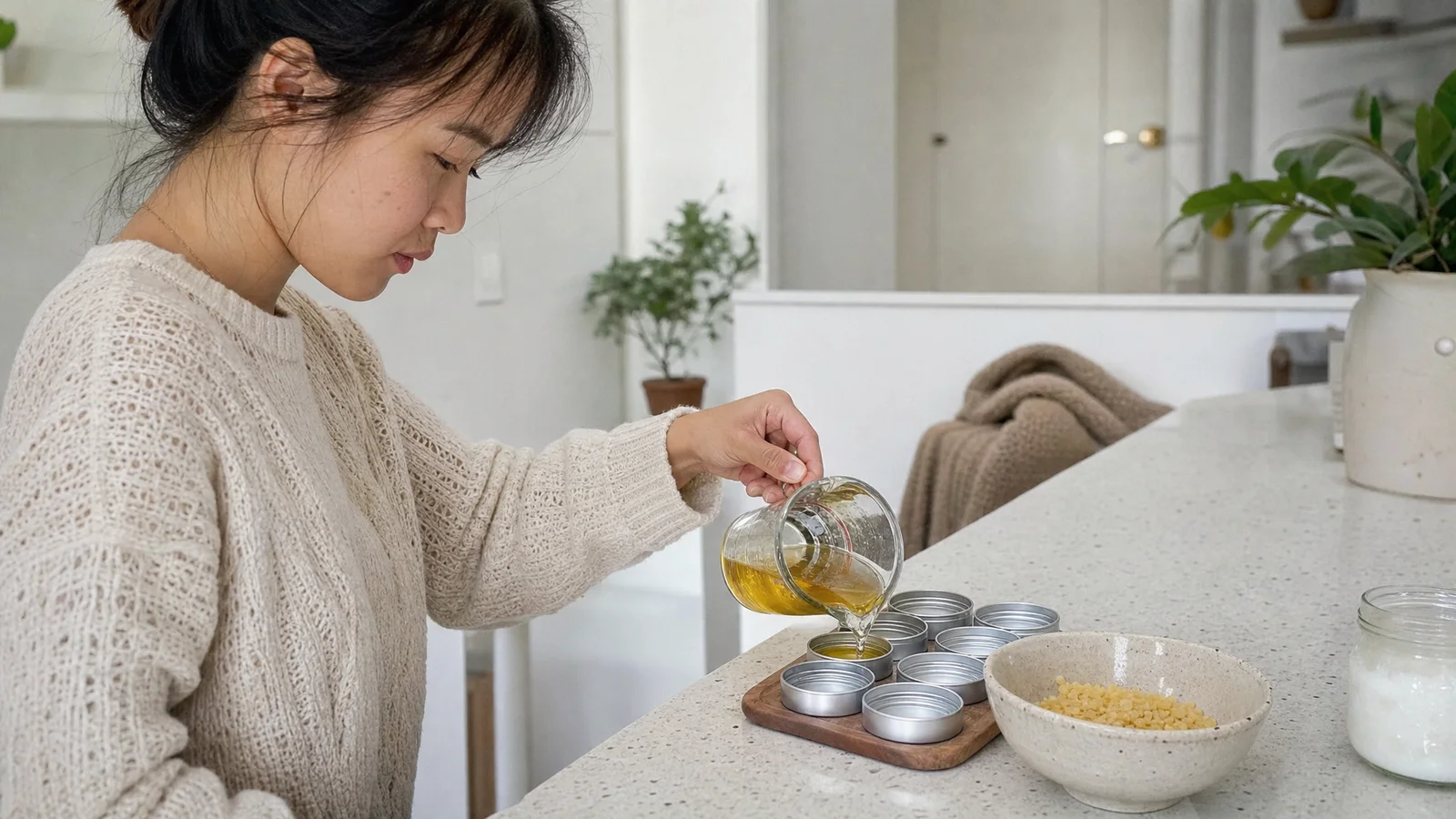
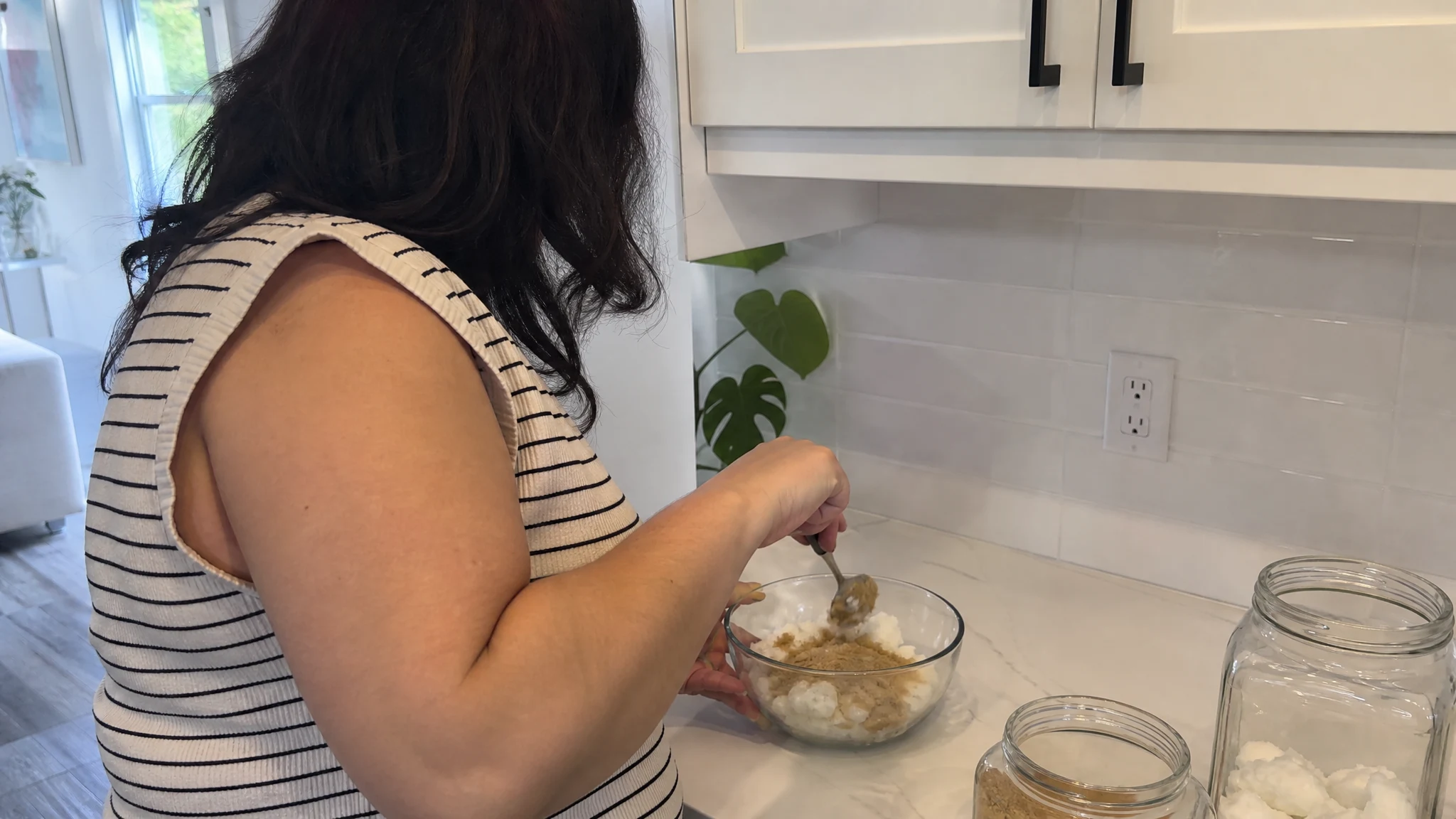
No published standard sets a sugar scrub ratio, so we think of one part oil to two parts sugar by volume as a friendly starting point. In a 4 oz (118 ml) jar that is about 40 ml of oil, a little under three tablespoons (a tablespoon is about 14.8 ml), and roughly 79 ml of sugar. Stir it together and let the mixture tell you what it needs:
- Crumbly, with sugar falling off the spoon? Add oil a teaspoon (about 4.9 ml) at a time.
- Glossy and wet, with oil pooling in the jar? Add sugar a tablespoon at a time.
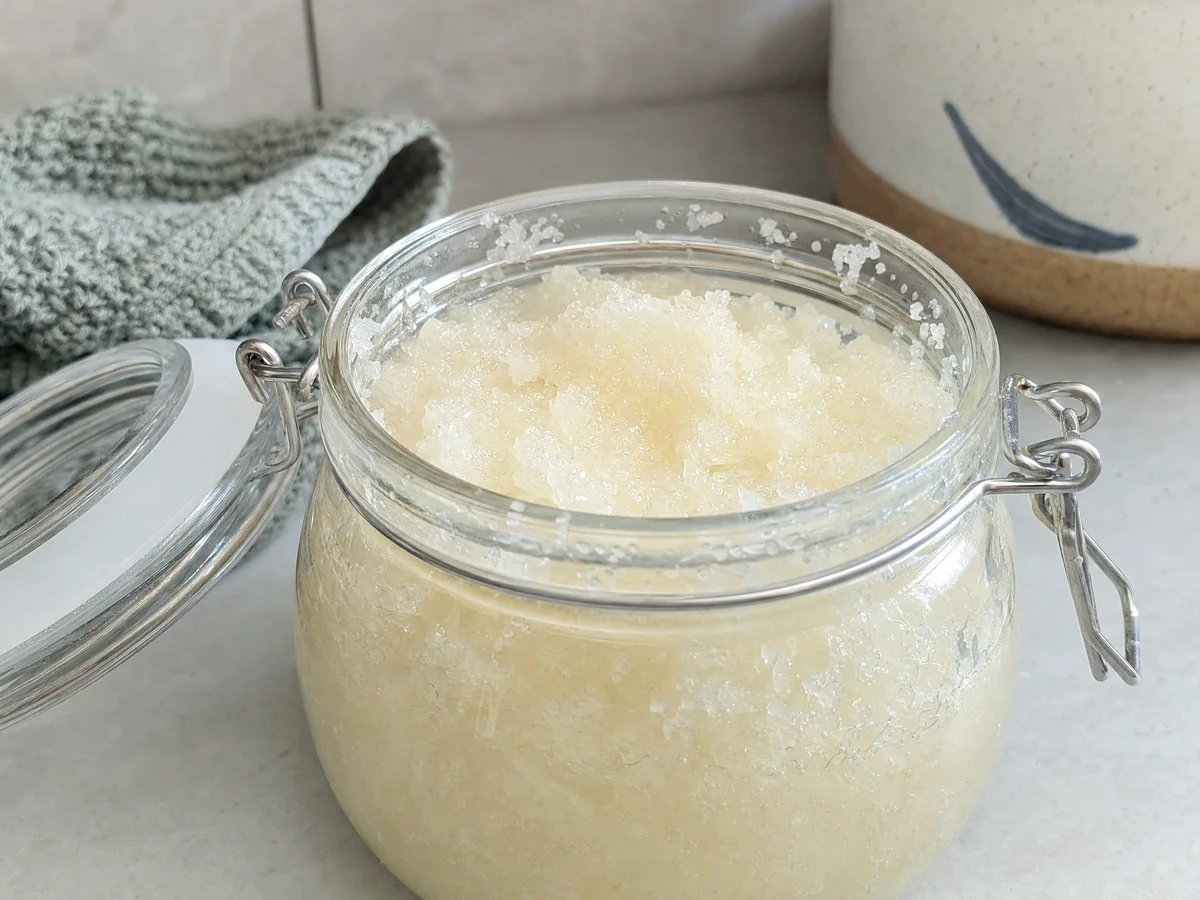
- Holding together like damp sand? Stop right there. That is the texture to aim for.
If you like to work by weight, the one fractionated batch on our published Certificate of Analysis measured a relative density of 0.948, so 40 ml of that oil weighs about 38 g. Sugar varies with the grind, so weigh your first finished jar and write the number on the lid for next time.
Liquid scrub or spoonable paste?
The two coconut oils we sell make two quite different scrubs. Our fractionated coconut oil stays liquid at any temperature, so the scrub stays a loose, glistening mix in a chilly bathroom and a warm one. We describe it as fast-absorbing and virtually odorless, which means the scent you pick is the only scent in the jar. Because nothing sets it, the oil settles toward the bottom as the jar sits, so a quick stir before each use keeps things even.
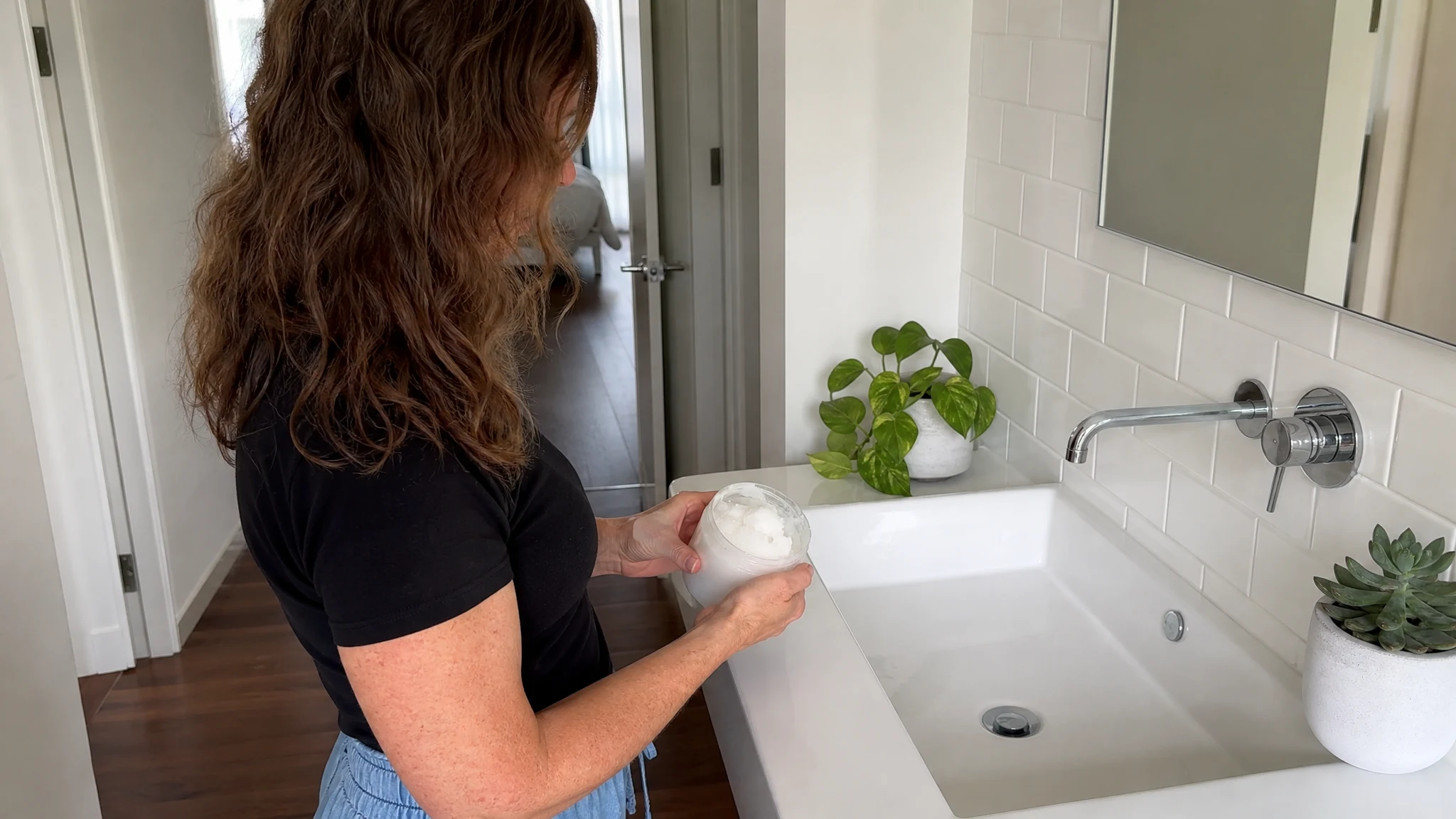
Our virgin unrefined coconut oil is the opposite personality. It is firm in a cool room, melts in warm hands and smells like coconut. Measurements of virgin coconut oil put its melting point at about 25 C, or 77 F (Yang et al., 2026), so a virgin scrub is a thick paste in winter and a softer one in summer, more like a balm with grit. If you love the tropical aroma, this is your oil, and it needs nothing else added. Both oils are sold for external cosmetic use.
Not sure which one suits you? Our guide to matching the oil to the job walks through the differences.
Five scent directions
Most scrub "flavors" are really just a choice of scent, so here are five ways to go:
- Citrus: a few drops of a citrus essential oil. Read that bottle's skin-use directions first, because some citrus oils come with their own guidance.
- Lavender: lavender essential oil, kept to the lower end of the range below.
- Tropical: virgin unrefined oil as the base and nothing else. The coconut is the flavor.
- Vanilla: an oil-soluble vanilla fragrance made for cosmetics. Baking vanilla contains water or alcohol and does not mix into an oil scrub.
- Unscented: fractionated oil and sugar. It is the easiest to get right and a gentle choice for sensitive skin.
For scented jars, the Tisserand Institute's dilution guide lists 0.2 to 1% for sensitive skin, 0.5 to 1.2% for facial products and 1 to 3% for body products. A scrub is an abrasive as well as a rinse-off product, so keeping to 0.5% or less is a comfortable choice. In a 120 g jar that is 0.6 g, roughly a dozen drops (we assume 20 drops to the milliliter and a density near 0.9, an approximation since bottles differ). Essential oils belong out of children's reach: the National Capital Poison Center notes that misuse can cause serious poisoning, and a sweet-smelling jar is tempting to a small child.
A dry jar is a happy jar
An oil and sugar scrub contains no water, and that is why it does not need a preservative. The FDA's microbiological safety page advises against adding water to cosmetic products and notes that some microorganisms grow faster in warm or damp storage. A shower shelf is warm, damp and full of wet fingers, so scoop a portion with a clean dry spoon, close the lid right away and keep the jar outside the shower. For the same reason, fresh zest, fruit, coffee grounds and herbs are better left out, since they bring moisture with them. If a jar ever shows pooled water, a changed smell or a spot of mold, let it go and make a fresh one.
Using it gently
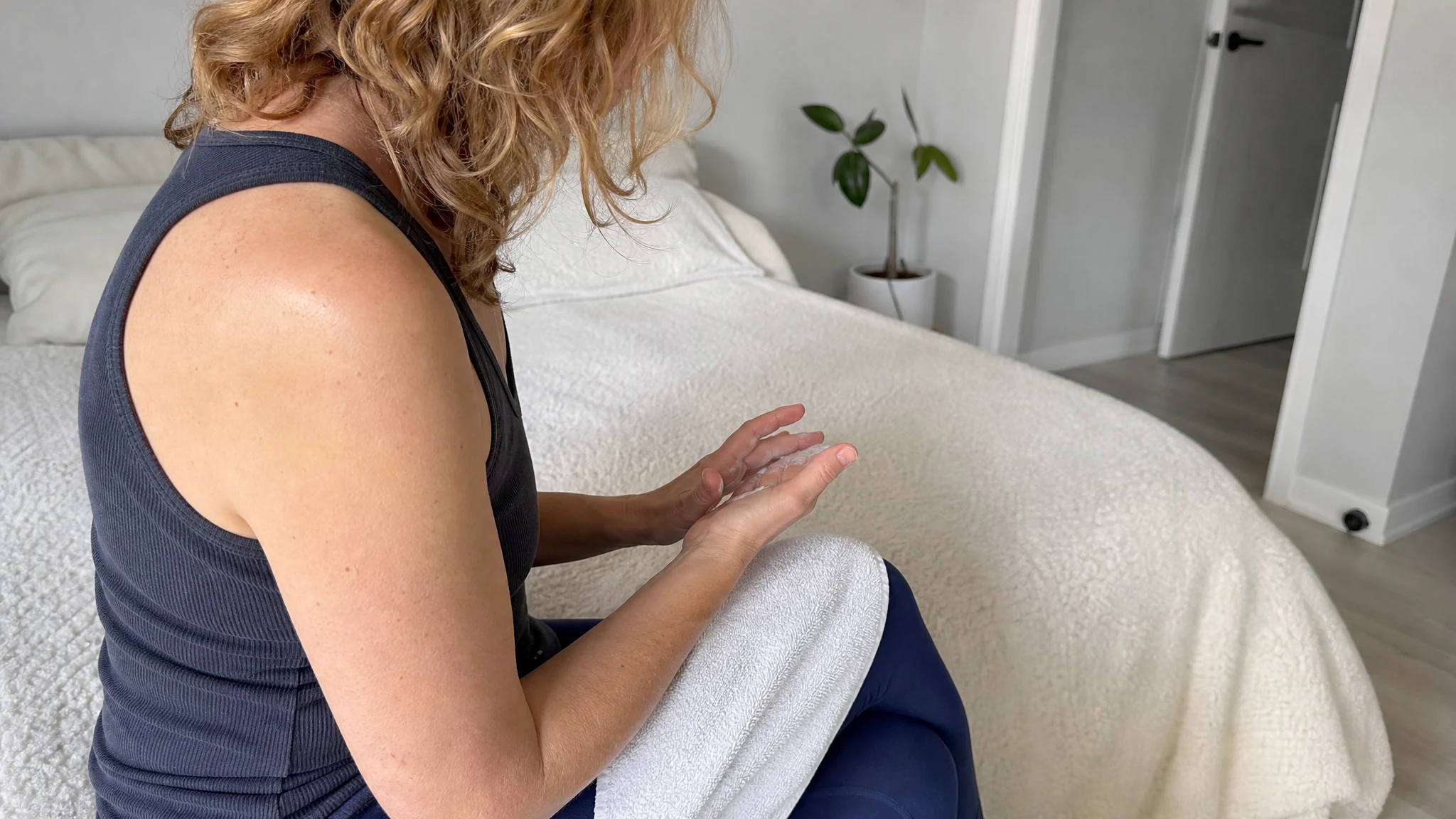
The American Academy of Dermatology has a short guide to exfoliating at home, shared as a news release featuring Rebecca Tung, MD, and its tips suit a sugar scrub nicely. Work the scrub in with small circular motions for about 30 seconds, rinse with lukewarm rather than hot water, and moisturize straight away, since exfoliating can leave skin dry. Skip it over open cuts or sunburned skin, because over-exfoliating can leave skin red and irritated. If your skin runs dry or sensitive, a washcloth may suit you better than a mechanical scrub, and a board-certified dermatologist is the right person to ask how often is right for you.
The AAD's dry skin tips add short warm showers and moisturizing while skin is still damp. A little fractionated oil patted on after the rinse suits that moment, though the film the scrub leaves behind may be all you need. Keep scrubs to the body rather than the face, which has thinner skin than the arms and legs. If you have a coconut allergy, check with an allergist first. And rinse the tub afterward, because an oil scrub leaves it slippery.
When the jar is empty, a whipped body butter or a pocket-size lotion bar makes a lovely follow-up, and our gift-making ideas cover labels and shelf planning if your jars are headed to friends. If you fill a lot of jars, our bulk sizes and our guide to buying fractionated coconut oil in bulk explain the larger options.
Fractionated Coconut Oil
Fractionated Coconut Oil from our own shop, in sizes from 0.5 oz to bulk.
From $9.99
Shop Now →Sources & Further Reading
- Tisserand Institute, undated. Essential oil dilution. tisserandinstitute.org
- National Capital Poison Center, undated. Essential oils. poison.org
- U.S. FDA, 2024. Microbiological Safety and Cosmetics. fda.gov
- American Academy of Dermatology (Tung R), undated release. How to safely exfoliate at home. newswise.com
- American Academy of Dermatology, 2026. Dermatologists' top tips for relieving dry skin. aad.org
- Yang H et al., 2026. Synergistic effects of ultrasound and stirring on crystallization behavior of coconut oil. pmc.ncbi.nlm.nih.gov/PMC13277645