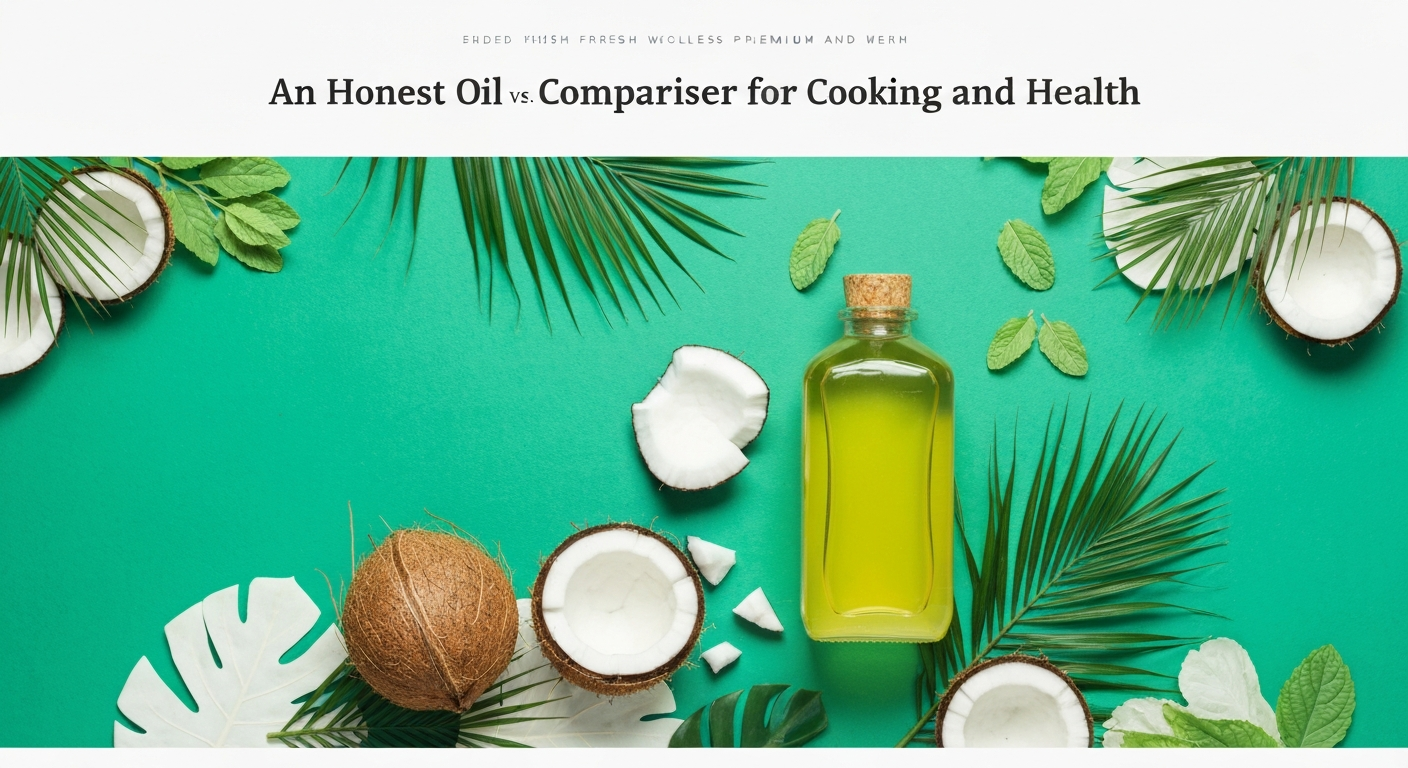
Coconut Oil vs. Ghee: An Honest Comparison for Cooking and Health
The battle between coconut oil and ghee has home cooks everywhere debating which fat deserves prime real estate in their pantries. Both have passionate advocates, impressive nutritional profiles, and centuries of traditional use behind them. But when it comes to your kitchen and your goals, which one actually comes out on top?
We're diving deep into this culinary face-off with zero bias and all the facts. Whether you're looking for the perfect coconut oil for cooking applications or wondering if ghee might be your new go-to, we've got you covered with a comprehensive breakdown that'll help you make the right choice for your needs.
What Exactly Are We Comparing?
Before we jump into the nitty-gritty, let's establish what we're working with. Coconut oil is extracted from mature coconut meat and comes in refined and unrefined varieties. Ghee, also known as clarified butter, is butter that's been heated to remove water and milk solids, leaving behind pure butterfat with a rich, nutty flavor.
Both fats have deep cultural roots—coconut oil has been a staple in tropical regions for millennia, while ghee holds sacred status in Indian cuisine and Ayurvedic traditions. Today, they're both experiencing a renaissance in modern kitchens, particularly among those following ketogenic diets or seeking alternatives to conventional cooking oils.
Head-to-Head Comparison: The Key Metrics
Let's break down how these two powerhouse fats stack up across the most important categories:
| Attribute | Coconut Oil | Ghee |
|---|---|---|
| Smoke Point | 350°F (refined) / 280°F (unrefined) | 485°F |
| Flavor Profile | Mild coconut (unrefined) / Neutral (refined) | Rich, nutty, buttery |
| Saturated Fat Content | ~92% | ~65% |
| Shelf Stability (Room Temp) | 2+ years | 1+ years |
| Lactose Content | None (dairy-free) | Trace amounts |
| Price Range (per lb) | $8-15 | $10-20 |
| State at Room Temp | Solid below 76°F | Solid to semi-solid |
Coconut Oil: The Tropical Powerhouse
The Pros
- Exceptional shelf stability: Coconut oil can last years without refrigeration, making it perfect for pantry storage
- Dairy-free and vegan: A clear winner for those with dairy sensitivities or following plant-based diets
- Unique fatty acid profile: Rich in medium-chain triglycerides (MCTs), which some research suggests may be metabolized differently than long-chain fats
- Versatility beyond cooking: Can double as a natural moisturizer or hair treatment
- Neutral option available: Refined coconut oil offers cooking benefits without coconut flavor
- Keto-friendly: High saturated fat content makes it popular among those following a coconut oil keto diet
The Cons
- Lower smoke point: Unrefined coconut oil isn't ideal for high-heat cooking methods
- Flavor limitations: The coconut taste can overpower delicate dishes
- Texture changes: Melts and solidifies based on temperature, which can be inconvenient
- Environmental concerns: Some coconut oil production has been linked to deforestation and unsustainable practices
Ghee: The Golden Standard
The Pros
- Superior smoke point: At 485°F, ghee handles high-heat cooking like a champion
- Incredible flavor: That rich, nutty taste elevates everything from vegetables to proteins
- Lactose-reduced: The clarification process removes most milk proteins and lactose
- Traditional pedigree: Thousands of years of culinary use in Indian cuisine
- Stable at room temperature: No need for refrigeration in most climates
- Rich in fat-soluble vitamins: Contains vitamins A, D, E, and K when made from grass-fed butter
The Cons
- Not dairy-free: Still derived from butter, making it unsuitable for strict dairy avoiders
- Higher cost: Quality ghee typically costs more than coconut oil
- Strong flavor: The distinctive taste isn't suitable for all dishes
- Limited non-culinary uses: Unlike coconut oil, ghee is primarily just for cooking
- Cholesterol content: Contains dietary cholesterol, unlike plant-based coconut oil
The Cooking Performance Showdown
High-Heat Cooking
When it comes to high-temperature cooking methods like searing, frying, or roasting, ghee takes the crown. With its impressive 485°F smoke point, it can handle whatever heat you throw at it without breaking down or producing off-flavors. Understanding coconut oil smoke point limitations is crucial here—unrefined coconut oil starts smoking at just 280°F, making it unsuitable for high-heat applications.
Refined coconut oil performs better at 350°F, but still can't match ghee's heat tolerance. For stir-fries, deep-frying, or getting that perfect sear on your protein, ghee is your best bet.
Baking Applications
Both fats work beautifully in baking, but in different ways. Coconut oil creates tender, moist baked goods and can often substitute for butter in vegan recipes. Its solid-to-liquid temperature transition point means you need to consider your recipe's requirements carefully.
Ghee brings rich flavor to baked goods and creates beautifully flaky pastries. It's particularly excellent in traditional Indian sweets and Middle Eastern pastries where its nutty flavor is desired.
Flavor Impact
This is where personal preference really shines. Unrefined coconut oil imparts a subtle tropical note that works wonderfully in certain cuisines—think Thai curries, tropical desserts, or morning smoothies. Refined coconut oil offers the cooking benefits without flavor interference.
Ghee's rich, complex flavor profile adds depth to dishes in a way that few other fats can match. It's transformative in Indian cuisine, incredible with roasted vegetables, and makes ordinary scrambled eggs taste gourmet.
Nutritional Considerations
Both coconut oil and ghee are calorie-dense fats providing about 120 calories per tablespoon. However, their nutritional profiles differ significantly:
Coconut oil is predominantly saturated fat (about 92%), with a unique composition of medium-chain triglycerides. Some research suggests these MCTs may be processed differently by the body compared to long-chain fatty acids, though more studies are needed to fully understand the implications.
Ghee contains roughly 65% saturated fat, with the remainder being monounsaturated and polyunsaturated fats. When made from grass-fed butter, ghee may contain beneficial compounds like conjugated linoleic acid (CLA) and fat-soluble vitamins.
It's important to note that neither fat should be considered a health remedy or treatment for any condition. Both can be part of a balanced diet when used in moderation, but individual dietary needs vary greatly.
Best Use Cases: When to Choose What
Choose Coconut Oil When:
- You're following a dairy-free or vegan lifestyle
- Making low-to-medium heat dishes (under 350°F)
- Creating tropical-inspired cuisines where coconut flavor is welcome
- You want a multi-purpose product for both cooking and personal care
- Budget is a primary concern
- You're following ketogenic dietary approaches and want MCT benefits
Choose Ghee When:
- High-heat cooking is your primary need
- You want maximum flavor impact in your dishes
- Making traditional Indian or Middle Eastern cuisine
- You can tolerate dairy derivatives
- You're willing to invest in premium cooking fat
- You want the richest, most luxurious mouthfeel
Cost and Accessibility
Both fats have become increasingly accessible, though availability varies by location. Coconut oil is generally more widely available and slightly more budget-friendly, with quality options ranging from $8-15 per pound. You'll find it in most grocery stores, health food stores, and online retailers.
Ghee typically costs $10-20 per pound for quality versions, with grass-fed varieties commanding premium prices. While it's becoming more mainstream, you might need to visit specialty stores or shop online for the best selection.
Environmental and Ethical Considerations
Both products come with environmental considerations worth noting. Coconut oil production has faced scrutiny over deforestation concerns in some regions, though sustainable options exist. Look for organic, fair-trade certifications when possible.
Ghee's environmental impact depends largely on the dairy farming practices used for the source butter. Grass-fed, pasture-raised options generally have better environmental profiles than conventional dairy products.
The Verdict: It's Not Really a Competition
Here's the honest truth: declaring a single winner in the coconut oil vs ghee debate misses the point entirely. These are fundamentally different products that excel in different scenarios, and the "best" choice depends entirely on your specific needs, dietary restrictions, and cooking goals.
If you're dairy-free, following a plant-based diet, or need a versatile fat for medium-heat cooking with long shelf stability, coconut oil is your clear choice. Its unique properties make it irreplaceable in certain applications.
If you prioritize high-heat cooking performance, want maximum flavor impact, and can include dairy derivatives in your diet, ghee is unbeatable. Nothing quite matches its combination of heat tolerance and rich taste.
For most home cooks, the real answer is having both in your pantry. Use coconut oil for its specific strengths—vegan baking, medium-heat sautéing, and dishes where its flavor profile works. Reserve ghee for high-heat cooking, flavor-forward applications, and when you want to elevate simple ingredients into something special.
Making Your Choice
Consider these key decision factors when choosing between coconut oil and ghee:
- Dietary restrictions: Dairy sensitivity makes coconut oil the obvious choice
- Primary cooking methods: High-heat cooking favors ghee; medium-heat and baking work well with either
- Flavor preferences: Neutral taste needs point to refined coconut oil; flavor enhancement suggests ghee
- Budget considerations: Coconut oil typically offers better value
- Storage requirements: Both store well at room temperature
Remember, the best cooking fat is the one you'll actually use and enjoy. Both coconut oil and ghee can contribute to delicious meals when used appropriately for their strengths. Consider starting with the one that best matches your primary cooking needs, then experiment with the other as your culinary confidence grows.
Whatever you choose, focus on quality sources, proper storage, and using these fats as part of a varied, balanced approach to cooking and eating. Your taste buds—and your dishes—will thank you.