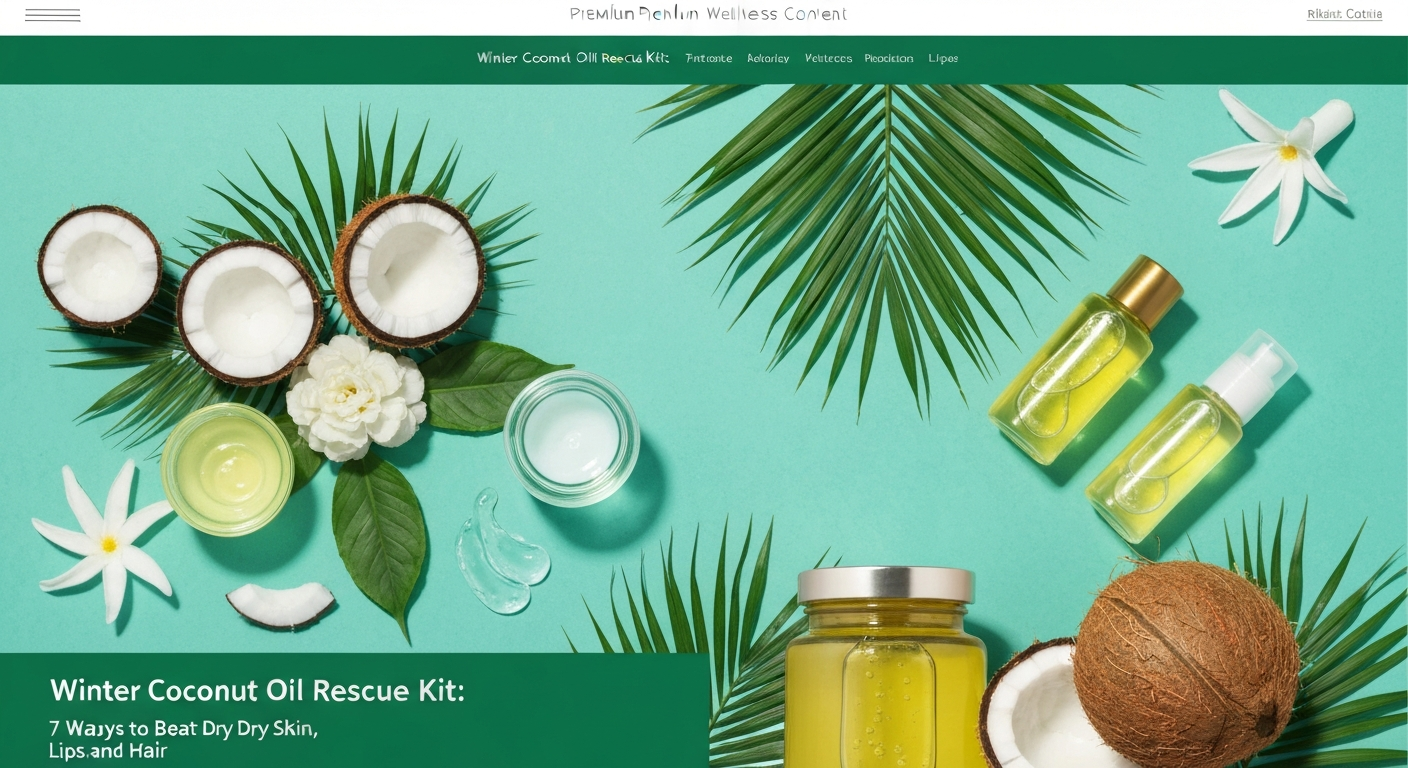
Winter Coconut Oil Rescue Kit: 7 Ways to Beat Dry Skin, Lips, and Hair
As temperatures drop and heating systems kick into high gear, winter brings a perfect storm of conditions that can leave your skin, lips, and hair feeling parched and brittle. The cold air outside holds less moisture, while indoor heating systems strip away what little humidity remains. This seasonal challenge calls for a natural, versatile solution that's been trusted for generations: coconut oil.
Rich in fatty acids and naturally moisturizing compounds, coconut oil may help support your skin's natural barrier function during the harsh winter months. Unlike some commercial moisturizers that contain synthetic ingredients, coconut oil offers a simple, single-ingredient approach to winter skin care that many people find effective for maintaining moisture and comfort.
Why Winter Wreaks Havoc on Your Skin
Understanding why winter is so challenging for your skin can help you choose the most effective care strategies. Cold air naturally contains less moisture than warm air, creating an environment that draws moisture from your skin through a process called transepidermal water loss.
Indoor heating compounds this problem by creating artificially dry environments, often reducing humidity levels to 10-20% – far below the 40-60% range that skin typically prefers. This combination of cold, dry outdoor air and heated indoor spaces creates the perfect conditions for:
- Increased skin sensitivity and irritation
- Chapped, cracked lips
- Dry, brittle hair that's prone to static
- Flaky, tight-feeling facial skin
- Rough patches on elbows, knees, and heels
Your 7-Point Winter Coconut Oil Action Plan
1. Deep Moisturizing Body Treatment
For severely dry winter skin, coconut oil may help provide intensive moisture support. Apply organic, unrefined coconut oil to slightly damp skin immediately after showering to help lock in moisture. The oil's natural composition allows it to absorb relatively quickly while potentially supporting your skin's protective barrier.
Pro tip: Focus on typically dry areas like elbows, knees, and heels. Some people report that applying coconut oil before bed allows for maximum absorption overnight.
For more comprehensive information about using coconut oil for skin care, explore our detailed guide on coconut oil for skin.
2. Emergency Lip Rescue
Chapped lips are perhaps winter's most immediate and uncomfortable challenge. Coconut oil's natural composition may help support lip moisture, and many people find it provides a protective barrier against harsh winter winds.
DIY Winter Lip Treatment:
- 1 tablespoon coconut oil
- 1 teaspoon honey (optional, for additional moisture)
- 2-3 drops peppermint essential oil (optional, for a refreshing sensation)
Gently warm the coconut oil until soft, mix ingredients, and apply as needed throughout the day. Store in a small container for easy application.
Safety note: If using essential oils, ensure proper dilution and perform a patch test first. Avoid if you have sensitive skin or allergies to any ingredients.
Learn more about creating natural lip care solutions in our guide to coconut oil lip balm.
3. Hair Hydration Mask
Winter air can leave hair dry, static-prone, and difficult to manage. Some research suggests that coconut oil's unique molecular structure may allow it to penetrate the hair shaft, potentially supporting hair moisture from within.
Weekly Winter Hair Mask:
- Warm 2-3 tablespoons of coconut oil until liquid
- Apply to dry hair, focusing on mid-lengths and ends
- Leave for 30 minutes to 2 hours
- Shampoo thoroughly (you may need to shampoo twice)
- Style as usual
Many people report that this treatment helps their hair feel softer and more manageable during dry winter months.
Discover more hair care applications in our comprehensive coconut oil for hair guide.
4. Gentle Facial Moisturizer
Facial skin often bears the brunt of winter weather exposure. For those with normal to dry skin, coconut oil may serve as a gentle moisturizer option, though it's important to note that some people with acne-prone skin may find it too heavy.
Application method: Use a tiny amount (about the size of a grain of rice) and warm between your palms before gently pressing into clean, slightly damp skin. Always patch test first, especially if you have sensitive or acne-prone skin.
5. Cuticle and Nail Care
Cold weather can leave cuticles dry and ragged. Coconut oil's moisturizing properties may help support nail and cuticle health during winter months. Simply massage a small amount into cuticles and nail beds before bedtime.
6. Soothing Bath Addition
Transform your winter bath routine by adding 1-2 tablespoons of melted coconut oil to warm (not hot) bath water. This may help support overall skin moisture and comfort, though results vary by individual.
Safety tip: Be extremely careful when exiting the tub, as coconut oil can make surfaces slippery. Consider placing a non-slip mat for safety.
7. Makeup Remover Alternative
Cold weather often calls for heavier makeup to protect skin, but harsh removers can worsen winter dryness. Some people find that coconut oil effectively removes makeup while potentially supporting skin moisture.
Method: Apply a small amount to a cotton pad and gently remove makeup, then cleanse with your regular cleanser to remove any residue.
Maximizing Your Winter Coconut Oil Results
Quality Matters
Choose organic, unrefined coconut oil for best results. This type retains more of its natural beneficial compounds and is less likely to contain processing chemicals that might irritate winter-sensitive skin.
Temperature Considerations
Coconut oil solidifies at temperatures below 76°F, which means it may be solid during winter months. This is completely normal – simply warm a small amount between your palms or place the container in warm water to soften before use.
Timing Is Everything
For best results, apply coconut oil to slightly damp skin to help lock in moisture. The ideal time is immediately after showering or washing, when skin still retains some water content.
Safety Considerations and When to Seek Alternatives
While many people find coconut oil beneficial for winter skin care, it's not suitable for everyone. Consider these important points:
- Those with tree nut allergies should consult a healthcare provider before use
- People with acne-prone skin may find coconut oil too comedogenic
- Always perform a patch test before first use
- If you experience irritation, discontinue use immediately
- Consult with a dermatologist if you have persistent skin conditions
Building Your Winter Skin Care Routine
Creating an effective winter skin care routine goes beyond just coconut oil application. Consider these complementary strategies:
- Use a humidifier to add moisture to indoor air
- Take shorter, lukewarm showers to prevent further moisture loss
- Stay hydrated by drinking plenty of water
- Choose gentle, fragrance-free cleansers
- Layer coconut oil under heavier creams for extra protection
Remember that everyone's skin responds differently to various ingredients and environmental conditions. What works well for one person may not be ideal for another, so it's important to pay attention to how your skin responds and adjust your routine accordingly.
This winter, let coconut oil be your natural ally in the fight against dry, uncomfortable skin. With these seven targeted applications, you can create a comprehensive approach to winter skin care that's simple, natural, and potentially effective for maintaining comfort throughout the cold season.