Coconut vs Palm Oil: Is Coconut Really Kinder?
Palm oil has a rough public reputation and coconut oil has a sunny one, so swapping the first for the second feels like an easy win. It is a lovely instinct, and the real story is more interesting. Coconut is a wonderful crop and a wonderful oil, but whether it is the kinder choice depends on how much land each tree needs, where it grows, and which fat is actually in the bottle.

Fractionated Coconut Oil
Our own Fractionated Coconut Oil, in sizes from 0.5 oz to bulk.
From $9.99
Shop Now →How much land does each oil need?
Hannah Ritchie of Our World in Data reports that producing one tonne of oil takes about 0.3 hectares of oil palm, 1.4 for sunflower or rapeseed, and 3.7 for coconut. In 2017, she writes, palm supplied 36% of the world's vegetable oil from 8.6% of the land, while coconut supplied 1.4% of the oil from 3.6% of the land (Our World in Data, 2021). Put simply, a hectare of oil palm makes a great deal more oil than a hectare of coconut.
The International Union for Conservation of Nature reaches the same place. Its issues brief says oil palm yields up to nine times more oil per unit area than other major oil crops, that production affects at least 193 threatened species on the IUCN Red List, and that a simple shift from palm to other oil crops may lead to further biodiversity loss (IUCN).
Our reading is that neither tree wins by default. Both sources describe oil at commodity scale and say nothing about any one grower, and a coconut farm and an oil palm plantation can each be run thoughtfully or carelessly. Palm certainly has serious chapters of its own, since a 2026 review links expansion onto peatlands to large carbon releases, yet it also notes that palm has the highest oil yield per hectare among major oil crops (John Martin et al., 2026). Both things are true together, which is why a slogan makes a poor shopping guide. The better question is where a particular oil came from.
Palm is really three fats
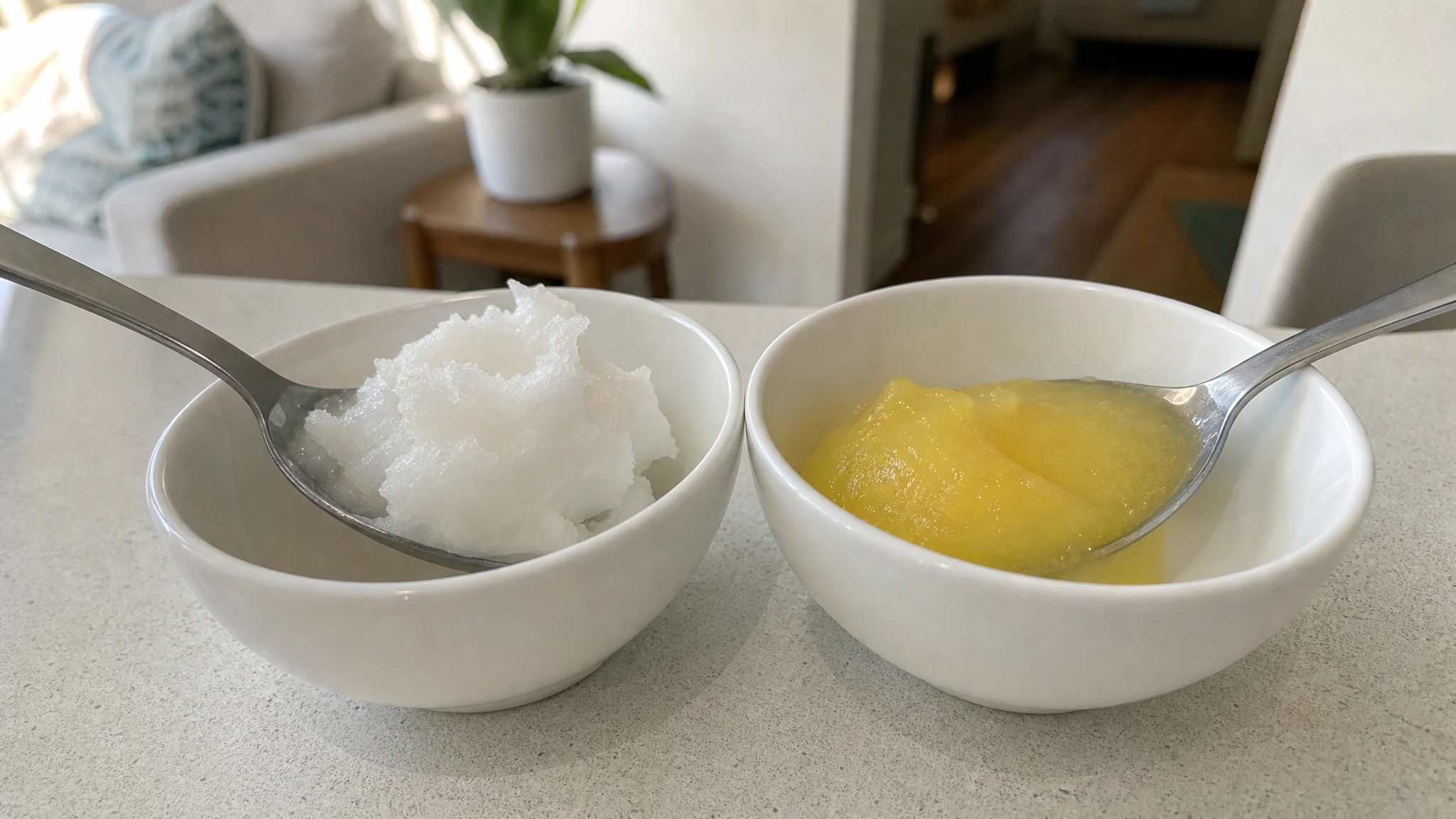
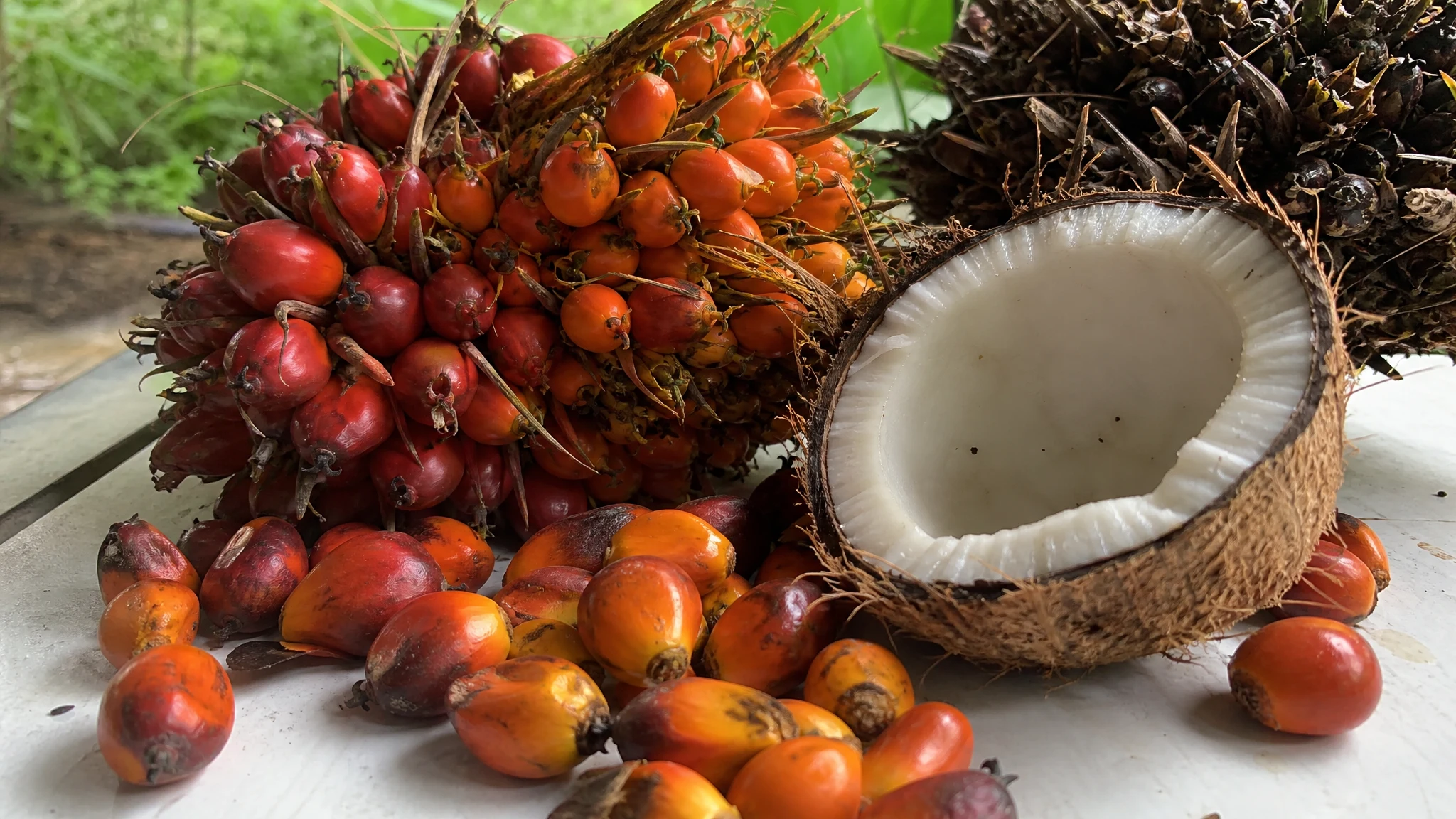
"Palm oil" can mean two quite different products. Oil pressed from the fruit is mostly palmitic and oleic acid. Oil from the seed kernel of the same palm is another fat entirely. One 2026 review tabulates palm kernel oil at about 45.6% lauric acid, against just 0.18% lauric acid for palm oil from the fruit (Thor et al., 2026), and coconut oil is about 49% lauric (Lin, Zhong and Santiago, 2018).
So palm kernel oil is a close cousin of coconut oil, while palm oil from the fruit is quite a different animal. A lauric-rich ingredient in a cosmetic could come from either tree, and a label that names only a function will not tell you which. We find this one of the more useful things to know when buying a carrier: look for the botanical name. Coconut is Cocos nucifera, and oil palm is Elaeis guineensis.
The certificate of analysis we publish for one batch of our fractionated oil lists the botanical as Cocos nucifera and the ingredient as "Cocos nucifera (Coconut) Fruit Oil". It does not say where the coconuts grew, so we make no origin claim, and if you need an origin or a farm-level certification, please ask us in writing before you order. Our look at which countries produce coconut oil shows what origin can and cannot tell you.
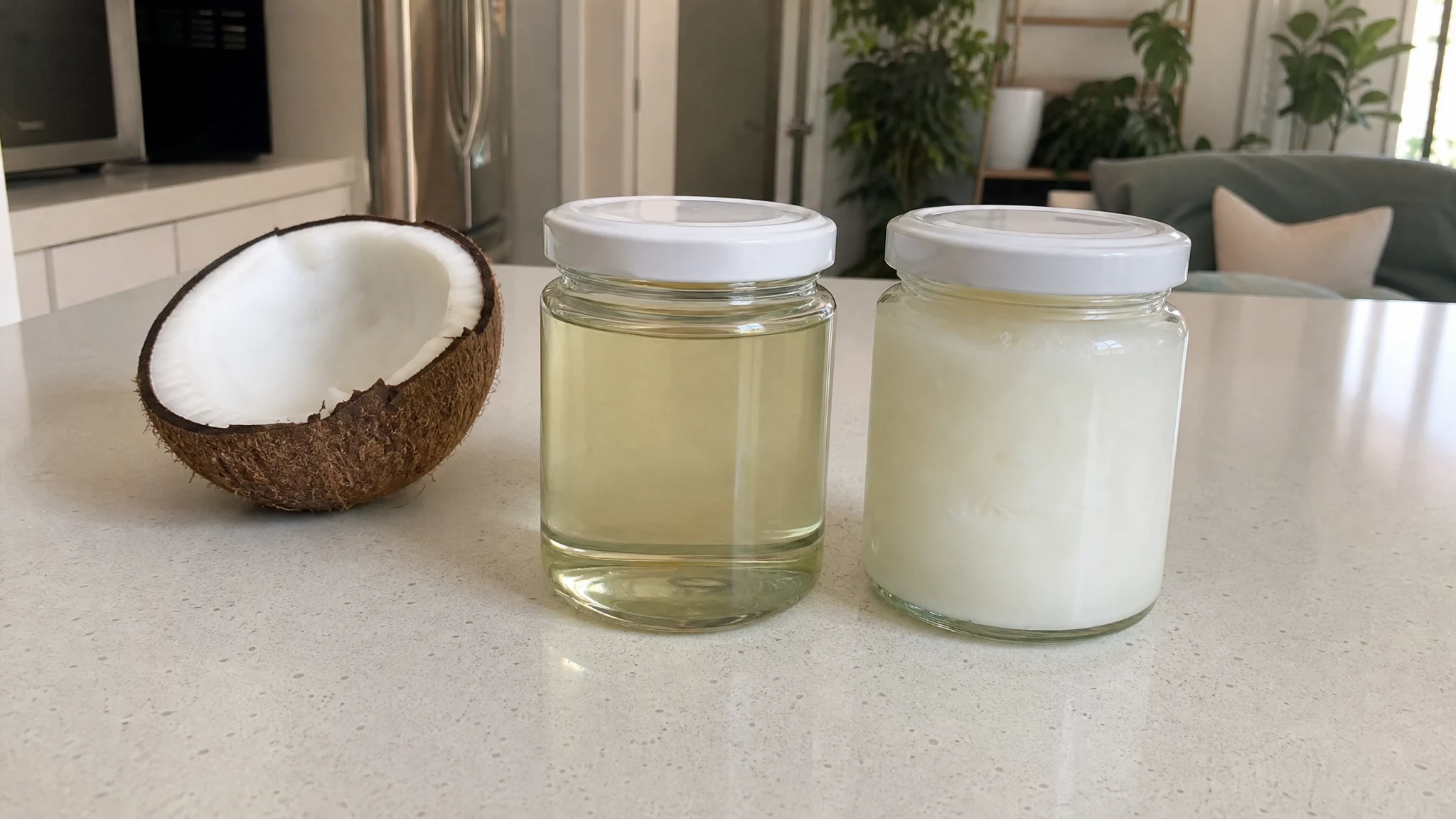
Fractionation changes the picture once more. Our fractionated oil has only the medium-chain triglycerides left, so the whole-oil percentages above do not describe it, and we publish no fatty acid percentages for either of our oils. What is fractionated coconut oil explains the process in general terms.
What about eating them?
Both of our oils are sold for external cosmetic use only, so the kitchen is where we point you elsewhere. For context, a meta-analysis of 16 trials found that coconut oil raised LDL cholesterol by 10.47 mg/dL and HDL by 4.00 mg/dL compared with non-tropical vegetable oils (Neelakantan, Seah and van Dam, 2020), and the palm review describes palm oil as sitting in the middle among common dietary fats. Neither points to a simple "this one is healthier" verdict. A physician or registered dietitian is the right person to ask about your own diet, and our coconut oil and health article goes deeper.
Reading the label while you shop
Take a quiet minute with the ingredient list before you decide. Plain names are the easy ones: when you see Cocos nucifera you know you are holding coconut. Longer, more technical names deserve a slower read, and a seller who is happy to explain them is a good sign. It also helps to decide what you care about most, whether that is land use, feel on the skin or scent, because the answer changes which questions are worth asking.
Choosing a cosmetic oil with confidence
A few habits make shopping easier than any slogan.
- Read the botanical name and make sure it matches what you meant to buy.
- Know the material. Virgin, refined and fractionated coconut oils behave differently in the bottle and on skin, and our virgin versus refined breakdown covers the differences.
- Match the paperwork to your question. Our one published certificate shows density, refractive index and optical rotation for a single batch. A fatty acid profile or an origin statement is a separate request, and it is perfectly reasonable to make it.
- Patch test. If you have a tree nut or coconut allergy, check with an allergist first; our allergy article has the details.
We would much rather you pick the oil that suits the job and put the sourcing questions to whoever sells it, us included, than choose coconut over palm on instinct. You can meet both of ours on the fractionated and virgin unrefined pages.
Good choices usually start with good questions, and you now have a handful of them.
Fractionated Coconut Oil
Fractionated Coconut Oil from our own shop, in sizes from 0.5 oz to bulk.
From $9.99
Shop Now →Sources & Further Reading
- Ritchie H, 2021. Palm oil. Our World in Data. ourworldindata.org/palm-oil
- IUCN. Palm oil and biodiversity, issues brief. iucn.org/palm-oil-and-biodiversity
- John Martin JJ et al., 2026. Palm oil: a review on nutritional composition, processing, contaminants, and sustainability frameworks. Front Plant Sci 17:1798946. PMC13183657
- Thor TG et al., 2026. The pharmaceutical applications of palm kernel oil. J Pharm Pharm Sci 29:16205. PMC13679054
- Lin TK, Zhong L, Santiago JL, 2018. Anti-inflammatory and skin barrier repair effects of topical application of some plant oils. Int J Mol Sci 19(1):70. PMC5796020
- Neelakantan N, Seah JYH, van Dam RM, 2020. The effect of coconut oil consumption on cardiovascular risk factors. Circulation 141(10):803-814. PMID 31928080