Sunflower or Coconut Oil? Know Your Bottle First
"Sunflower oil" is really two or three different oils sharing one name. One bottle is rich in linoleic acid and behaves like a classic salad oil. Another, labeled high oleic, is chemically closer to olive oil. Coconut oil sits at the other end of the spectrum, a saturated, solid-when-cool fat that behaves like nothing else in the pantry. So the first step in any comparison is a quick look at the label on your sunflower bottle.
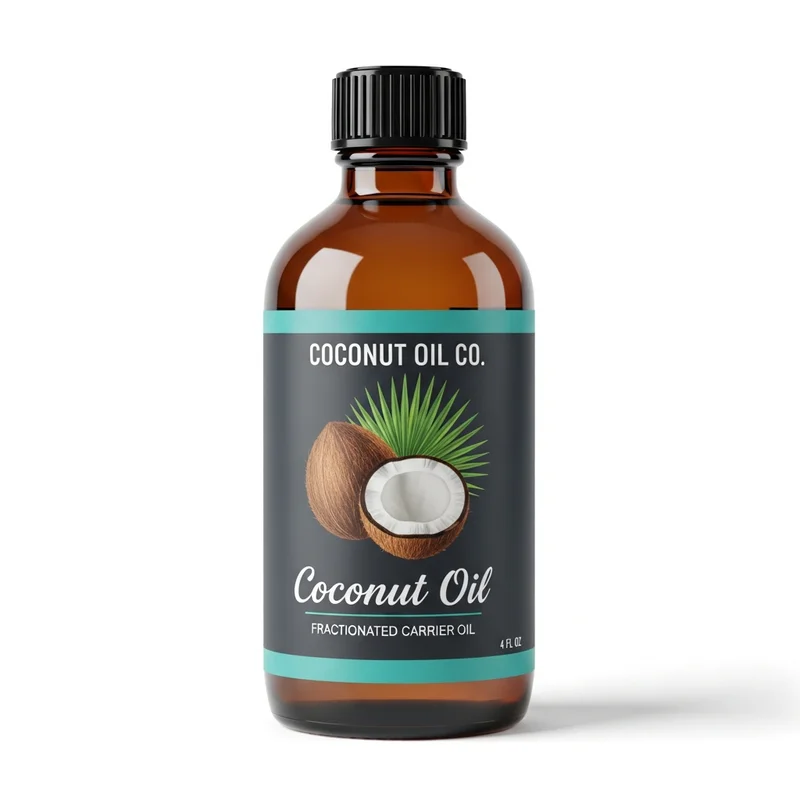
Fractionated Coconut Oil
Our own Fractionated Coconut Oil, in sizes from 0.5 oz to bulk.
From $9.99
Shop Now →Which sunflower oil do you have?
A frying study by Askin and Kaya measured two refined sunflower oils side by side and published their fresh fatty acids (Askin and Kaya, 2020):
| Oil (fresh) | Linoleic (C18:2) | Oleic (C18:1) |
|---|---|---|
| Refined linoleic sunflower oil | 54.30% | 34.10% |
| Refined oleic (high-oleic) sunflower oil | 15.40% | 75.40% |
| Refined olive oil (for reference) | 10.80% | 68.80% |
A high-oleic sunflower oil looks far more like olive oil than like the regular bottle. Look for the words "high oleic" on the label, and if they are missing, the linoleic type is a reasonable guess, though that is our inference and not a rule from the paper. For comparison, refined coconut oil was 92.0% saturated, 6.5% monounsaturated and 1.6% polyunsaturated when fresh in another frying study, with lauric acid near 47% (Yu, Cho and Hwang, 2018).
In the pan, hours matter
For frying, how long an oil stays hot tells you more than its smoke point. Askin and Kaya held oils at 180 C for 7 hours a day over five days, cooking fries in cycles. Total polar compounds, a marker of breakdown, passed the 24% limit on day four. High-oleic sunflower oil held up best, regular sunflower next and refined olive oil last, and the linoleic-rich sunflower lost the most linoleic acid. In the other study, refined coconut oil rose from 2.8% to 8.1% polar compounds across 80 batches of potato chips at 180 C, against 9.5% for refined soybean oil.
The two studies used different fryers, foods and schedules, so they are not a race. They do suggest that high-oleic sunflower and refined coconut oil are both sturdy frying oils, and that regular sunflower is the one to keep an eye on if you reuse oil. Our frying comparison and deep frying guide go further.
Flavor and texture in the kitchen
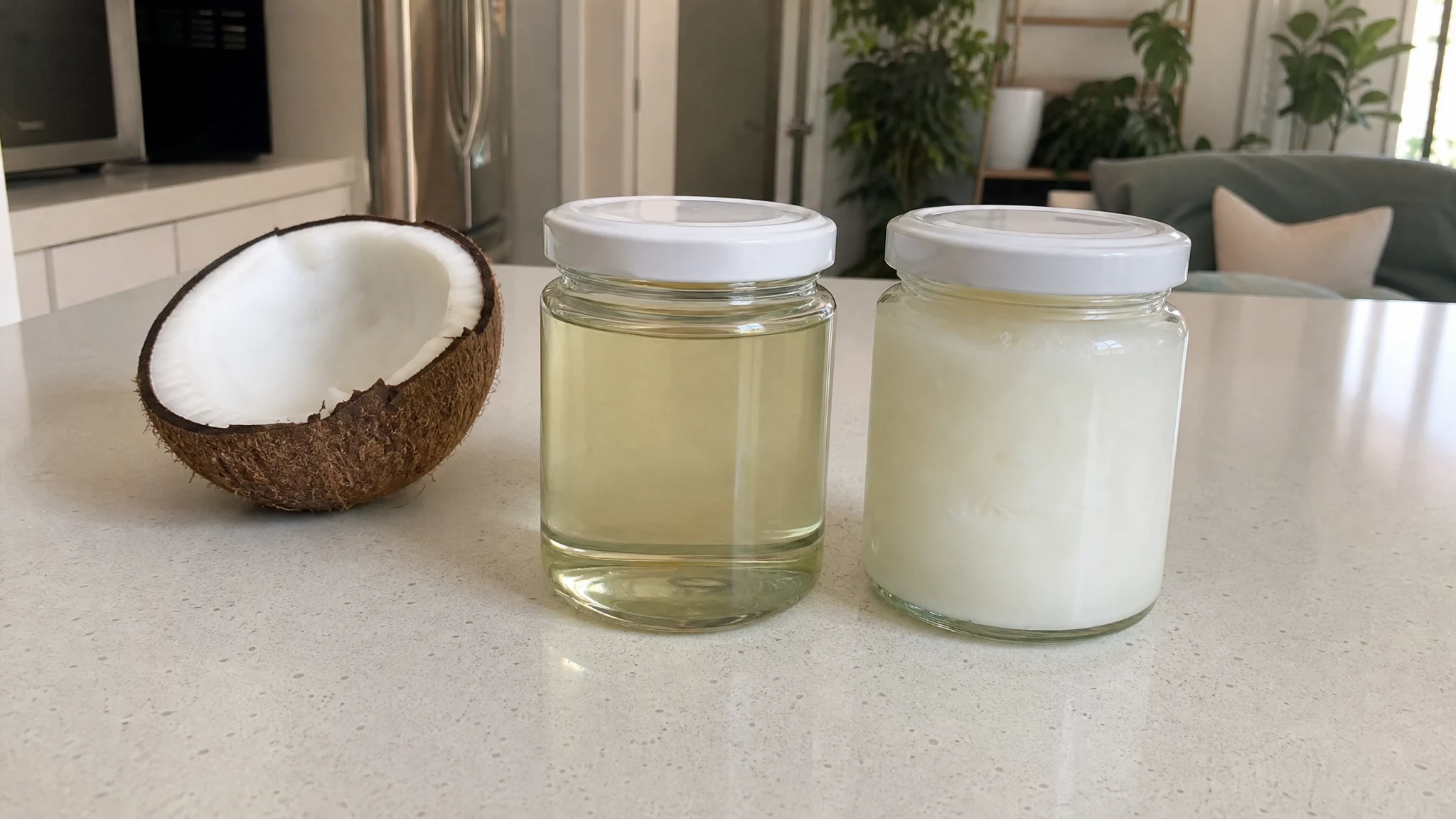
Refined sunflower oil is a neutral liquid, and coconut oil is a solid at cool room temperature that carries a coconut note unless it is refined. Our virgin unrefined, for example, has a rich, creamy coconut aroma and firms below about seventy-six degrees Fahrenheit, while refined versions are the neutral kind. From that it follows that coconut oil is the pick for pastry and no-bake bars where a solid fat is wanted, and sunflower oil is the pick for muffin batters, vinaigrettes and anything that has to stay pourable. For swap ratios, our baking guide has the numbers.
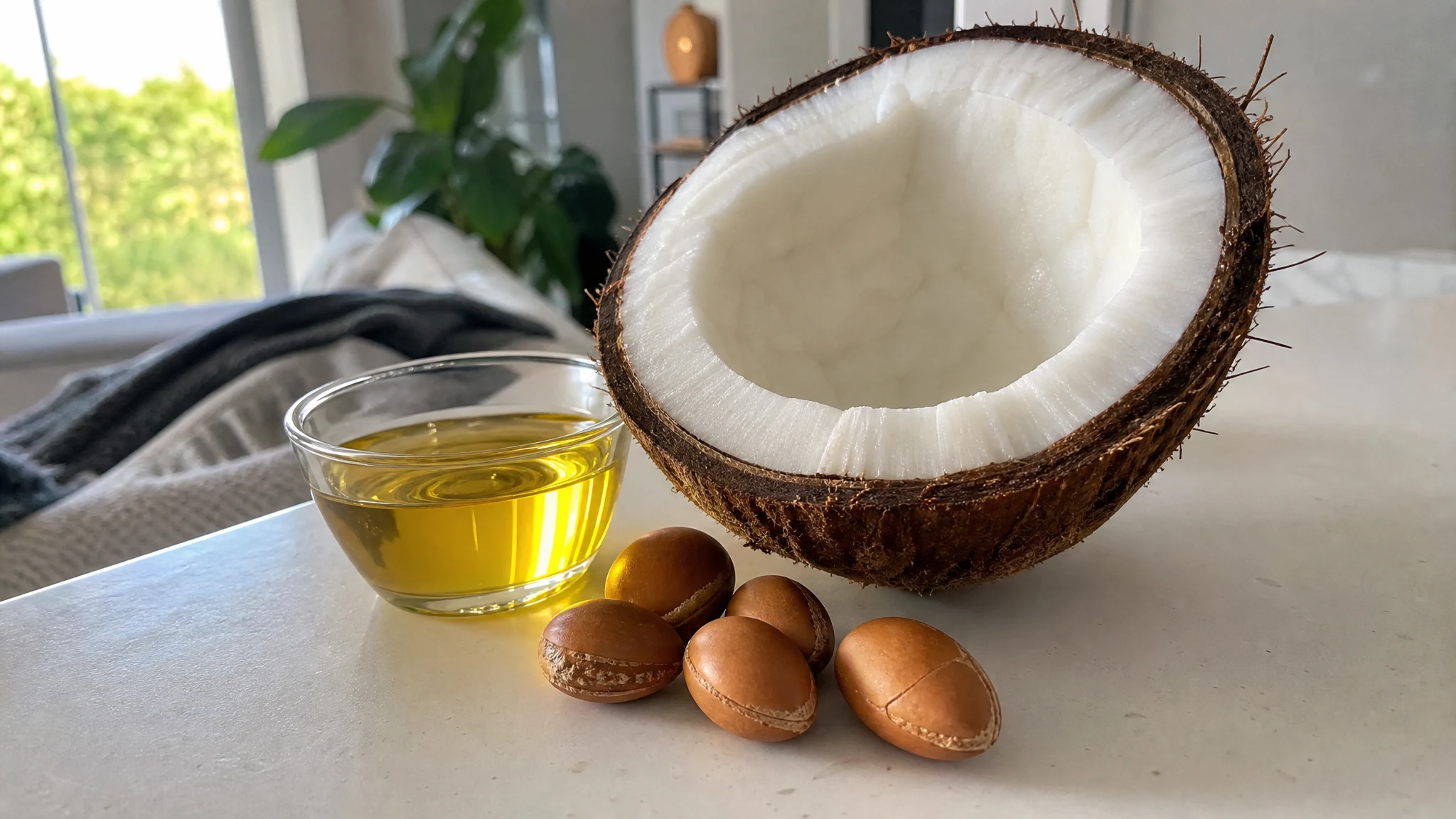
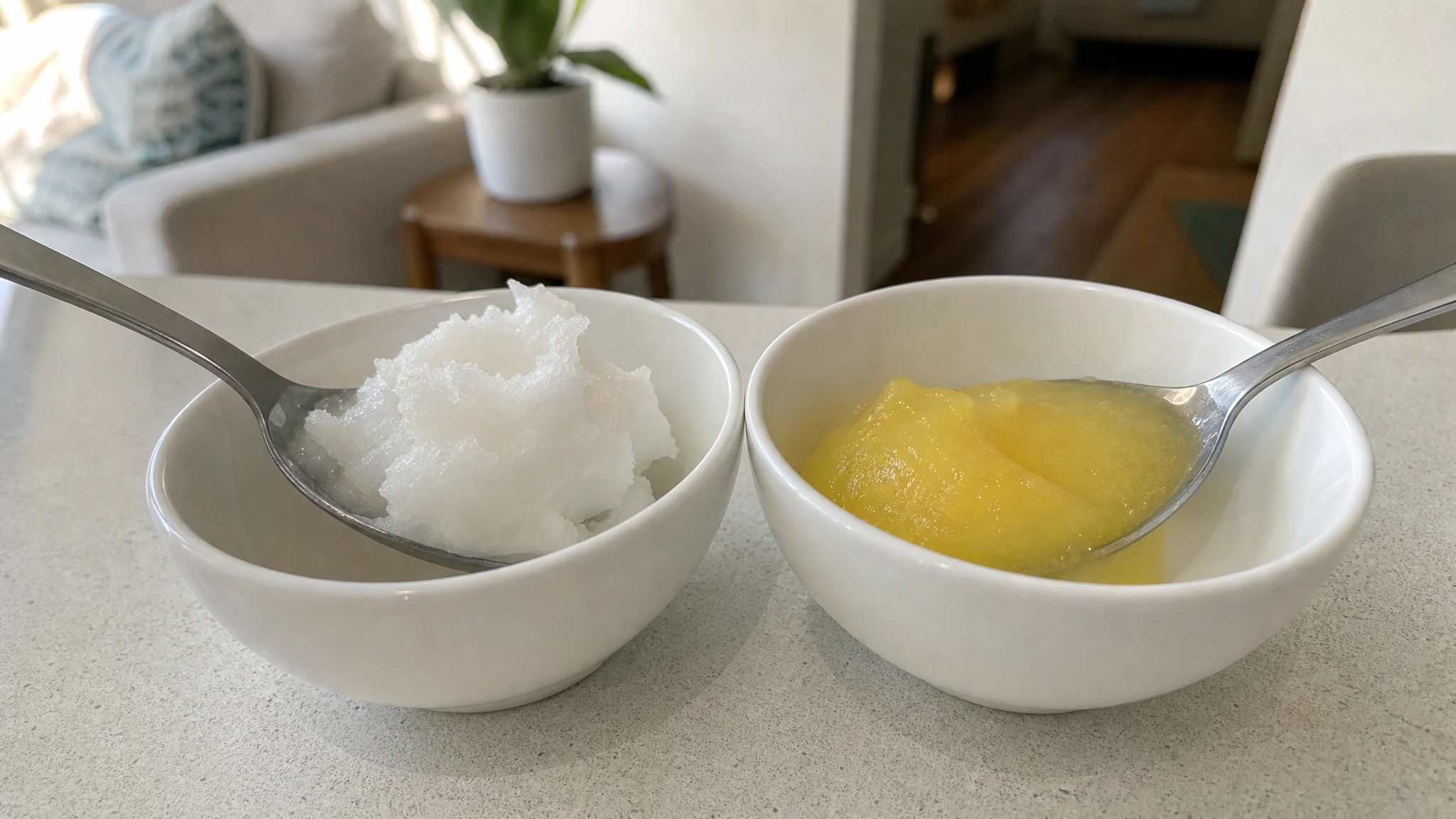
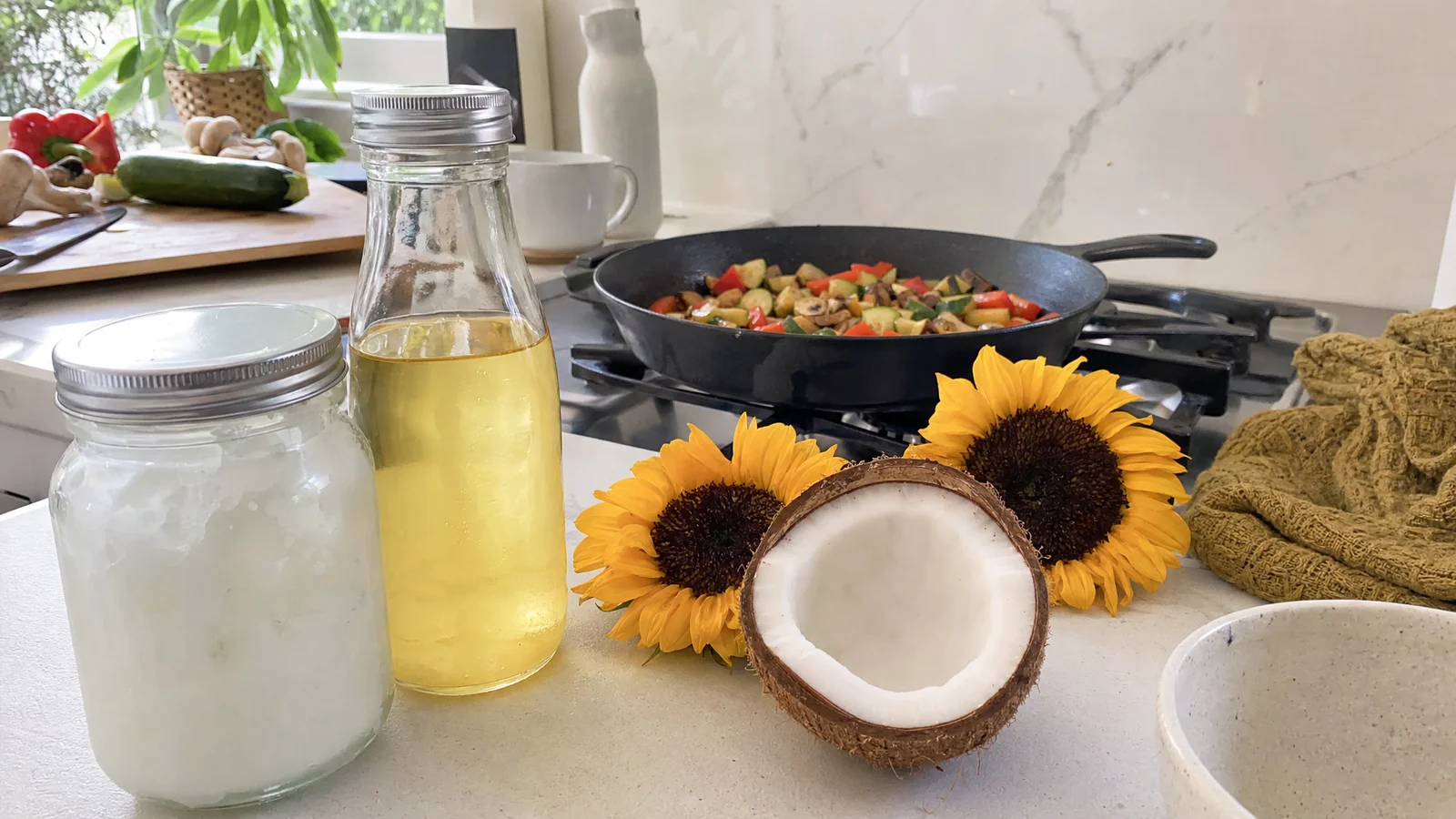
Picture the two oils on your counter. The sunflower bottle pours thin and golden and disappears into a batter, while the coconut jar is a creamy white solid you scoop with a spoon, and it turns clear as it melts in a warm pan. That contrast, more than any chart, tells you which one a recipe is asking for.
What the heart-health papers say
This is dietitian territory, so here is simply what the reviews report. The 2017 American Heart Association advisory found that replacing saturated fat with polyunsaturated vegetable oil in randomized trials lowered cardiovascular disease by about 30% (Sacks et al., 2017). Regular, linoleic-type sunflower oil is a polyunsaturated vegetable oil, and high-oleic sunflower is mostly monounsaturated. A pooled analysis of 16 trials found coconut oil raised LDL cholesterol by 10.47 mg/dL (95% CI 3.01 to 17.94) compared with nontropical vegetable oils, without naming sunflower specifically (Neelakantan et al., 2020). If cholesterol or heart disease is part of your life, a physician or registered dietitian should choose your cooking fat.
Skin and hair
Both oils have a research footprint in personal care, and each study is small. In 19 adult volunteers, sunflower seed oil applied to forearms over several weeks preserved the skin's barrier integrity, caused no redness and improved hydration, while olive oil did not fare as well (Danby et al., 2013). On hair, coconut oil was the only one of coconut, sunflower and mineral oil that markedly reduced protein loss in a laboratory study, which the authors linked to lauric acid (Rele and Mohile, 2003). Neither study used our fractionated coconut oil, which has had much of its lauric acid separated out, so carrying the hair result over to it would be an inference. Persistent skin conditions belong with a dermatologist.
We make fractionated coconut oil and a virgin unrefined coconut oil for external cosmetic use only, and neither is a food oil. For hair, skin and massage blends, our fractionated coconut oil is fast-absorbing and non-greasy, and the virgin unrefined is the one to choose when you want the coconut scent. Patch test a small area first and wait 24 hours.
Putting it together
For everyday cooking, an unsaturated oil is the usual pick, with high-oleic sunflower a sturdy choice for hot jobs. For a solid fat or a coconut note, coconut oil in amounts that suit the dish. For skin, hair and massage, a cosmetic oil. Let the job pick the oil, not the reputation. Our virgin versus refined guide is a good next read before you shop.
Fractionated Coconut Oil
Fractionated Coconut Oil from our own shop, in sizes from 0.5 oz to bulk.
From $9.99
Shop Now →Sources & Further Reading
- Askin and Kaya, 2020. Effect of deep frying process on the quality of the refined oleic/linoleic sunflower seed oil and olive oil. J Food Sci Technol 57(12):4716-4725. PMC7550478
- Yu, Cho and Hwang, 2018. Physicochemical properties and oxidative stability of frying oils during repeated frying of potato chips. Food Sci Biotechnol 27(3):651-659. PMC6049663
- Sacks et al., 2017. Dietary fats and cardiovascular disease: AHA presidential advisory. Circulation 136(3):e1-e23. PMID 28620111
- Neelakantan et al., 2020. Effect of coconut oil consumption on cardiovascular risk factors. Circulation 141(10):803-814. PMID 31928080
- Danby et al., 2013. Effect of olive and sunflower seed oil on the adult skin barrier: implications for neonatal skin care. Pediatr Dermatol 30(1):42-50. PMID 22995032
- Rele and Mohile, 2003. Effect of mineral oil, sunflower oil, and coconut oil on prevention of hair damage. J Cosmet Sci 54(2):175-192. PMID 12715094