Essential Oils That Pair Well With Coconut Oil
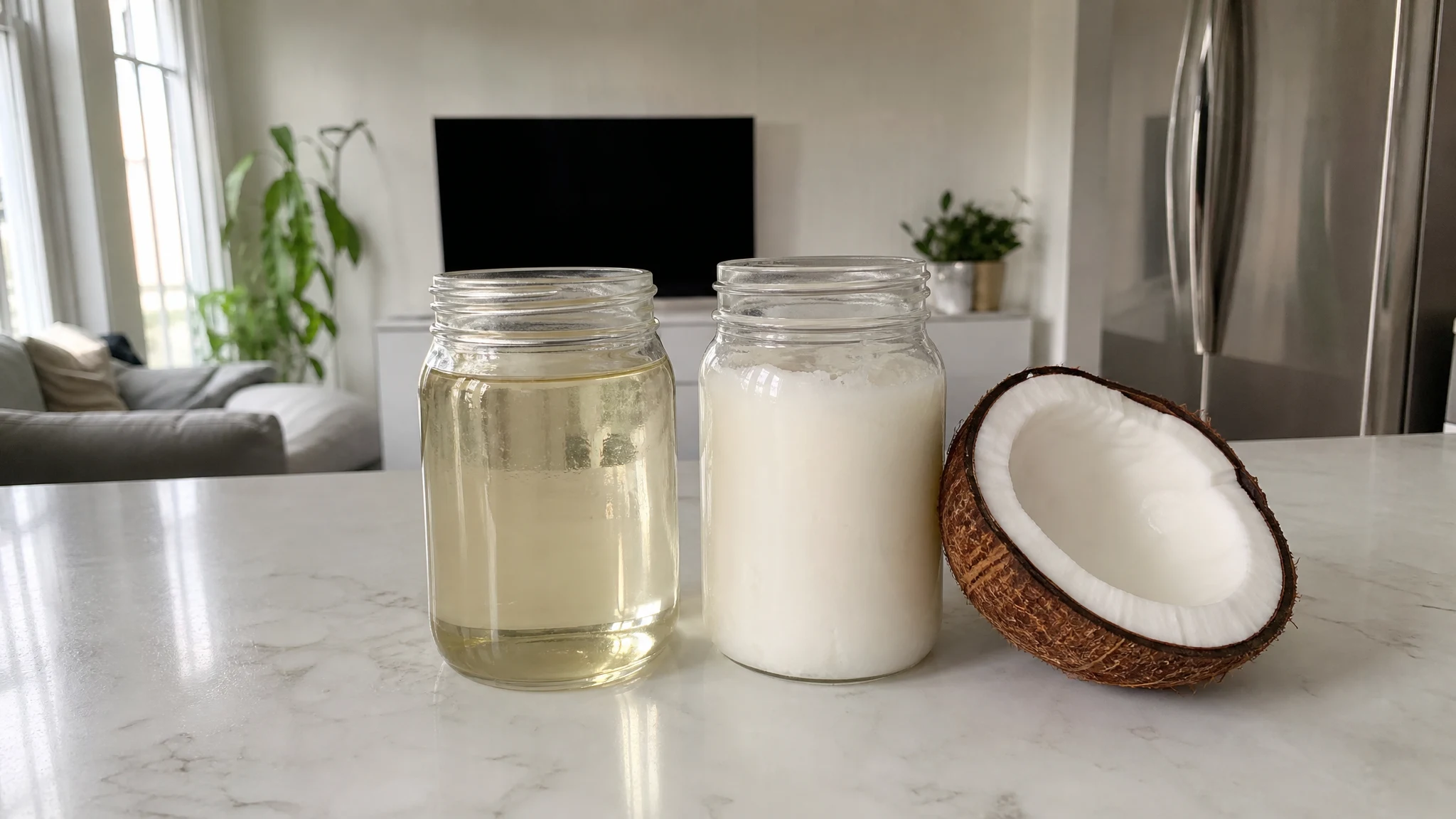
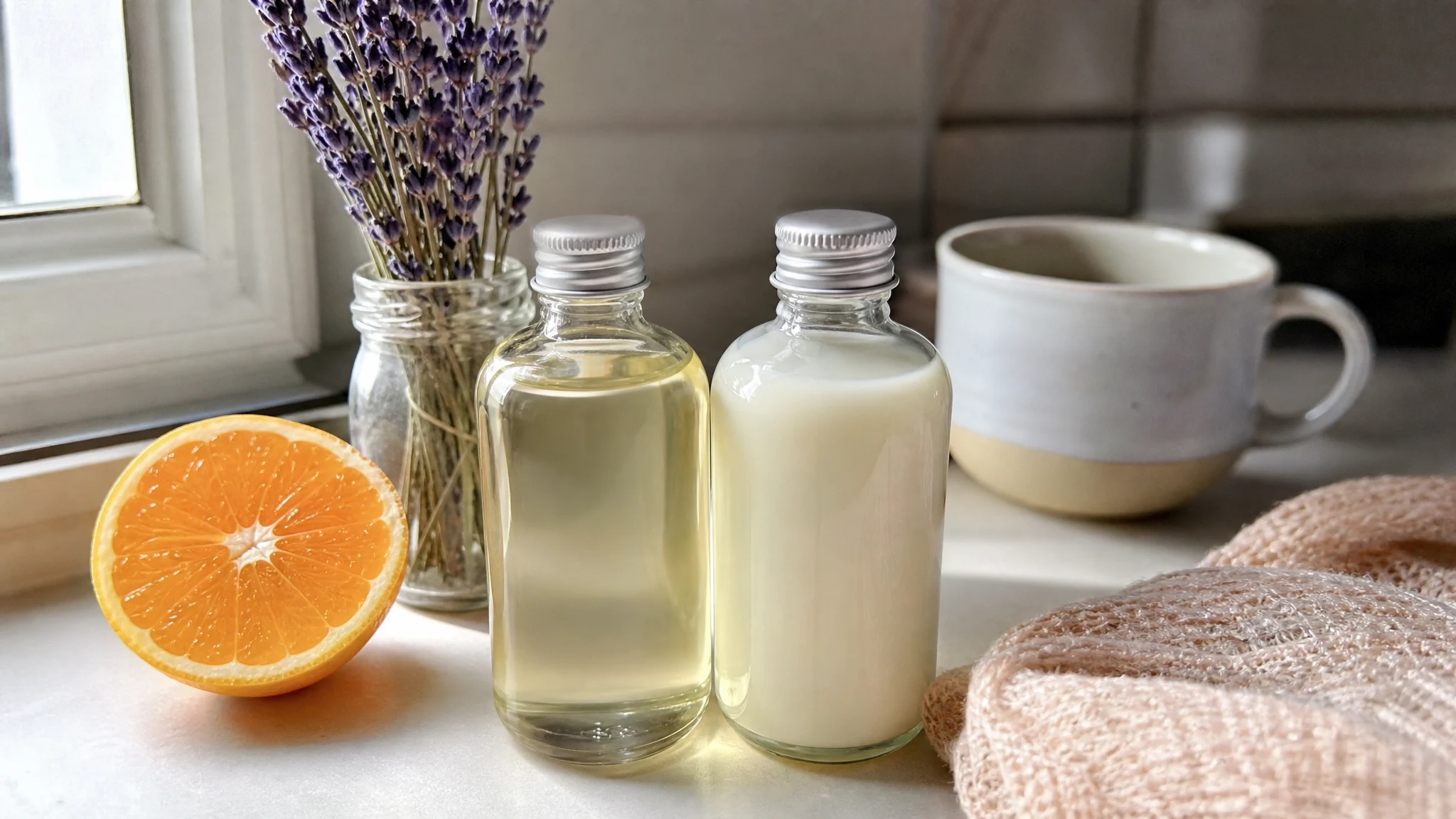
Open a jar of virgin coconut oil and you smell a beach before you have added anything. Open a bottle of fractionated coconut oil and you smell almost nothing at all. That one difference decides which essential oils to reach for, because in one jar the coconut is already part of the perfume and in the other bottle your essential oil is the whole perfume.
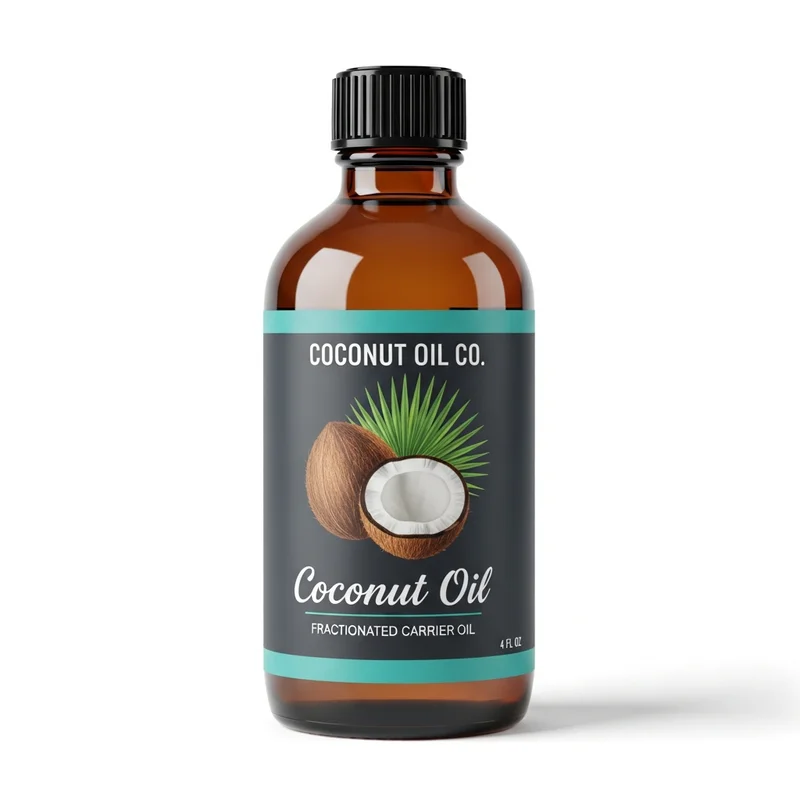
Fractionated Coconut Oil
Our own Fractionated Coconut Oil, in sizes from 0.5 oz to bulk.
From $9.99
Shop Now →Start with the base, then pick the scent
We sell fractionated coconut oil and a virgin unrefined listing, both for external cosmetic use, and we do not sell essential oils, so the oils below are ones you would pick up from the aromatherapy or craft supplier you prefer. What we can tell you is how each of our oils behaves as a backdrop.
We describe our fractionated oil as virtually odorless, fast-absorbing and liquid at any temperature. Think of it as a blank page: whatever you stir in is what you smell. The oils we list as natural partners for it are lavender, lemon, tea tree, peppermint, frankincense and rose.
Our virgin unrefined oil has a rich, creamy, unmistakable coconut aroma, firms up in a cool room and melts in warm hands. Here the coconut keeps singing, so you want partners that harmonise with it instead of fighting it. We list sweet orange, lavender, ylang ylang, vanilla, patchouli and sandalwood.
Pairings for the blank page
Because nothing is competing, fractionated oil lets each essential oil show its true character. A few ways to think about them:
- Lavender is the friendly all-rounder: floral, a little herbal, easy to like. It also turns up on our virgin list, so it is the one oil that works on both bases.
- Lemon is bright and clean, and it lifts lavender nicely. Tisserand's dilution guide notes that the IFRA limit for lemon oil, set to avoid phototoxicity, is 2%. That is a ceiling and not a recommendation, so we keep lemon to a small share of any blend.
- Peppermint is cool and sharp. A single drop goes a long way, and it is happiest with something resinous or floral to round it off.
- Frankincense is balsamic, woody and slightly citrusy, and it deepens whatever it sits beside. Frankincense with lemon is a classic.
- Rose is soft and romantic. Pair it with frankincense for something grown-up, or with lavender for something gentle.
- Tea tree is camphor-like and clean. It is a love-it-or-leave-it scent, so we give it a post of its own in our tea tree dilution maths.
Pairings that sit beside the coconut
With virgin oil, think of the dessert menu. Sweet orange gives you a sunny creamsicle effect. Vanilla (there are several forms of it at craft shops, so choose one made for skin) makes the coconut smell even more like a bakery. Patchouli and sandalwood add earthy, woody depth that stops the sweetness feeling sugary, and ylang ylang makes it floral and tropical. We gave ylang ylang with sweet orange its own recipe in the Islander blend, so we will not repeat the drops here.
Three small blends, with the arithmetic
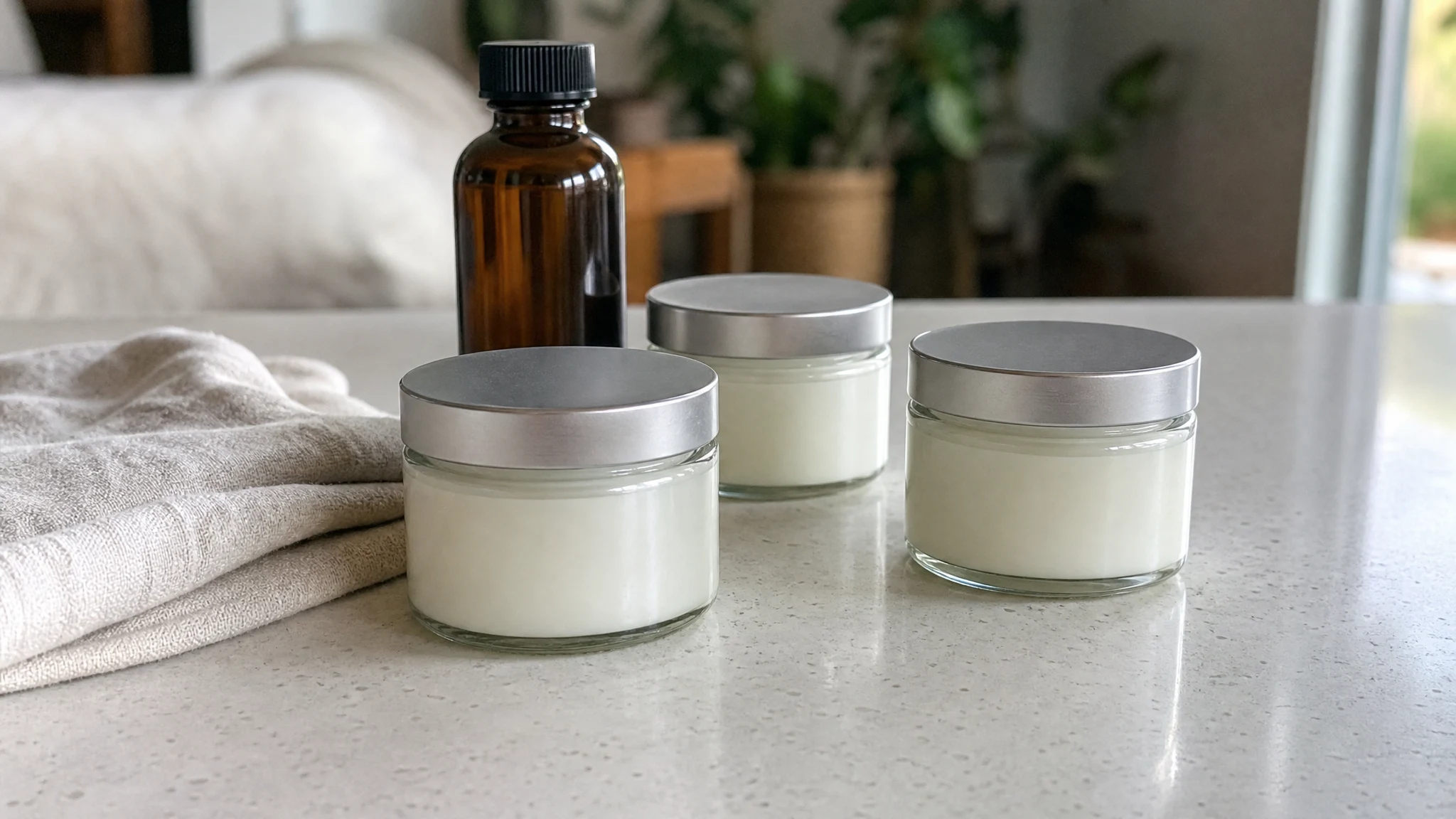
These are suggestions built from ratios and arithmetic, not prescriptions, and every number below can be scaled. Start from 1 fluid ounce (29.57 ml) of carrier, which is about 600 drops at the common planning figure of 20 drops to a millilitre. Tisserand's guide is clear that drop conversions are always approximate, which is why it works in percentages. One percent of 600 drops is 6 drops.
- Clean linen, in fractionated oil, about 1%: 3 drops lavender and 3 drops lemon in an ounce. Lemon is 0.5% of the bottle, well under its 2% ceiling.
- Warm and creamy, in virgin oil, about 1%: 4 drops sweet orange and 2 drops sandalwood in an ounce.
- Cool and resinous, in a 10 ml fractionated roller, about 1%: a 10 ml roller holds about 200 drops, so 1% is 2 drops: one peppermint and one frankincense.
The Tisserand Institute's ranges are 0.2 to 1% for sensitive skin, 0.5 to 1.2% for facial products and 1 to 3% for body oils. We recommend 0.5% to 2% for general skin use, and we start at the lower end. Fragrance is one of those places where more is rarely better. All three blends above sit at 1%, which is a comfortable place to learn what you like. Our step-by-step dilution guide goes further into weighing and pre-diluting.
Know your oils, and keep them fresh
Essential oils are a more personal choice than most ingredients. In a patch-test study of more than 62,000 dermatology patients, reactions to lavender were rare (0.3%), while ylang ylang (2.4%) and sandalwood (1.4%) drew more in the Central European group (Warshaw and colleagues, 2017). Those patients had been sent to clinics, so the figures do not describe the general public. They do explain why we suggest a patch test on a small area before using any new blend more widely, and why ylang ylang and sandalwood deserve a lighter hand.
Citrus oils are rich in limonene, and oxidised limonene is a recognised fragrance allergen: a multicentre study patch-tested 2,900 dermatitis patients with it. In practice that means buying citrus oils in small bottles, keeping them capped, cool and out of the light, and mixing only what you will use soon. If you are choosing between virgin and fractionated as the base, our comparison sets out the other differences.
Choose the base for the job, then let the scent follow. Two or three oils is plenty, enough that you can still pick out each one.
Fractionated Coconut Oil
Fractionated Coconut Oil from our own shop, in sizes from 0.5 oz to bulk.
From $9.99
Shop Now →Sources & Further Reading
- Dilution for essential oils, Robert Tisserand, Tisserand Institute
- Positive Patch-Test Reactions to Essential Oils in Consecutive Patients From North America and Central Europe, Warshaw EM and colleagues, Dermatitis 2017;28:246-252
- Positive patch test reactions to oxidized limonene: exposure and relevance, Bråred Christensson J and colleagues, Contact Dermatitis 2014;71:264-272